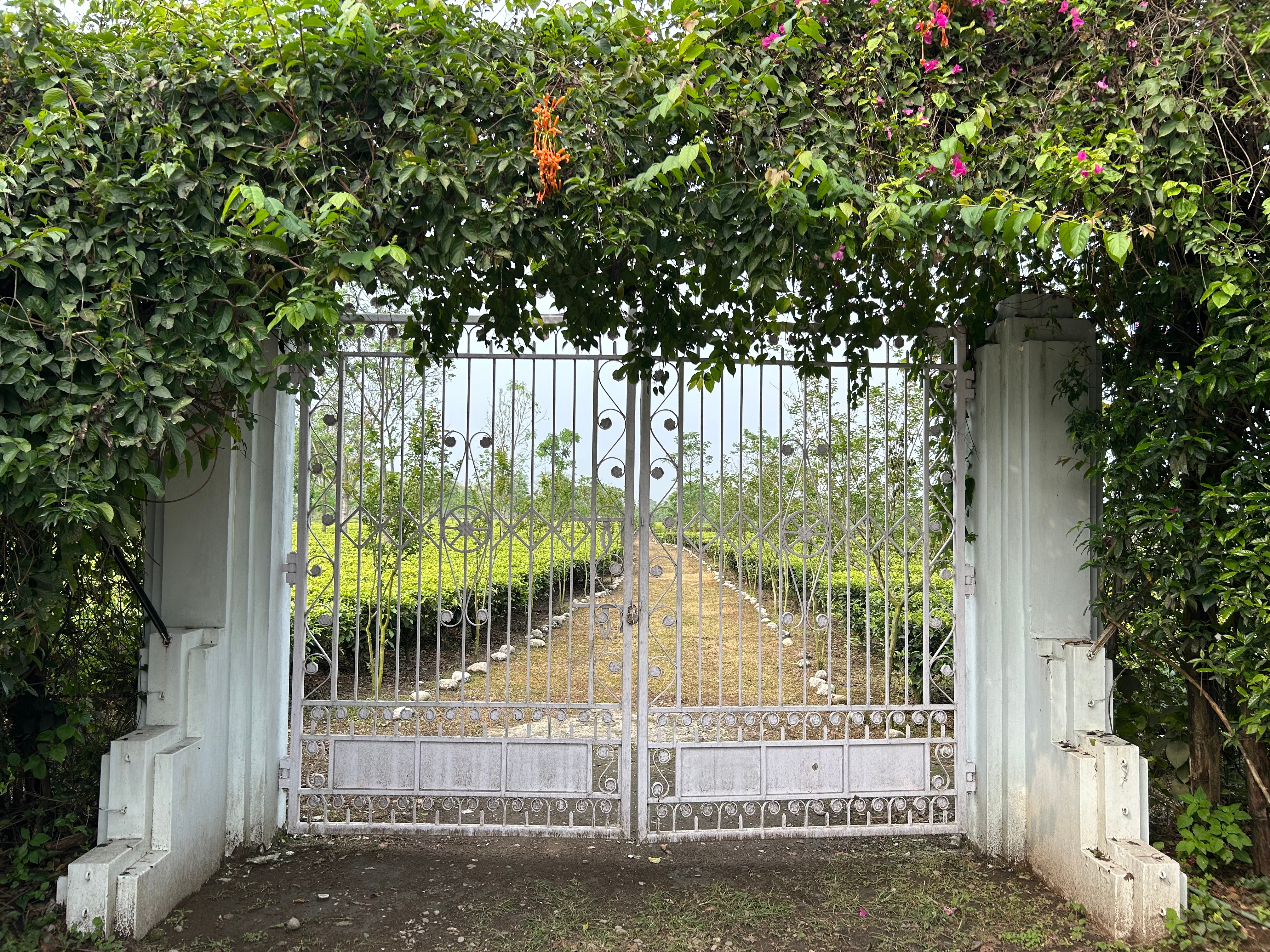
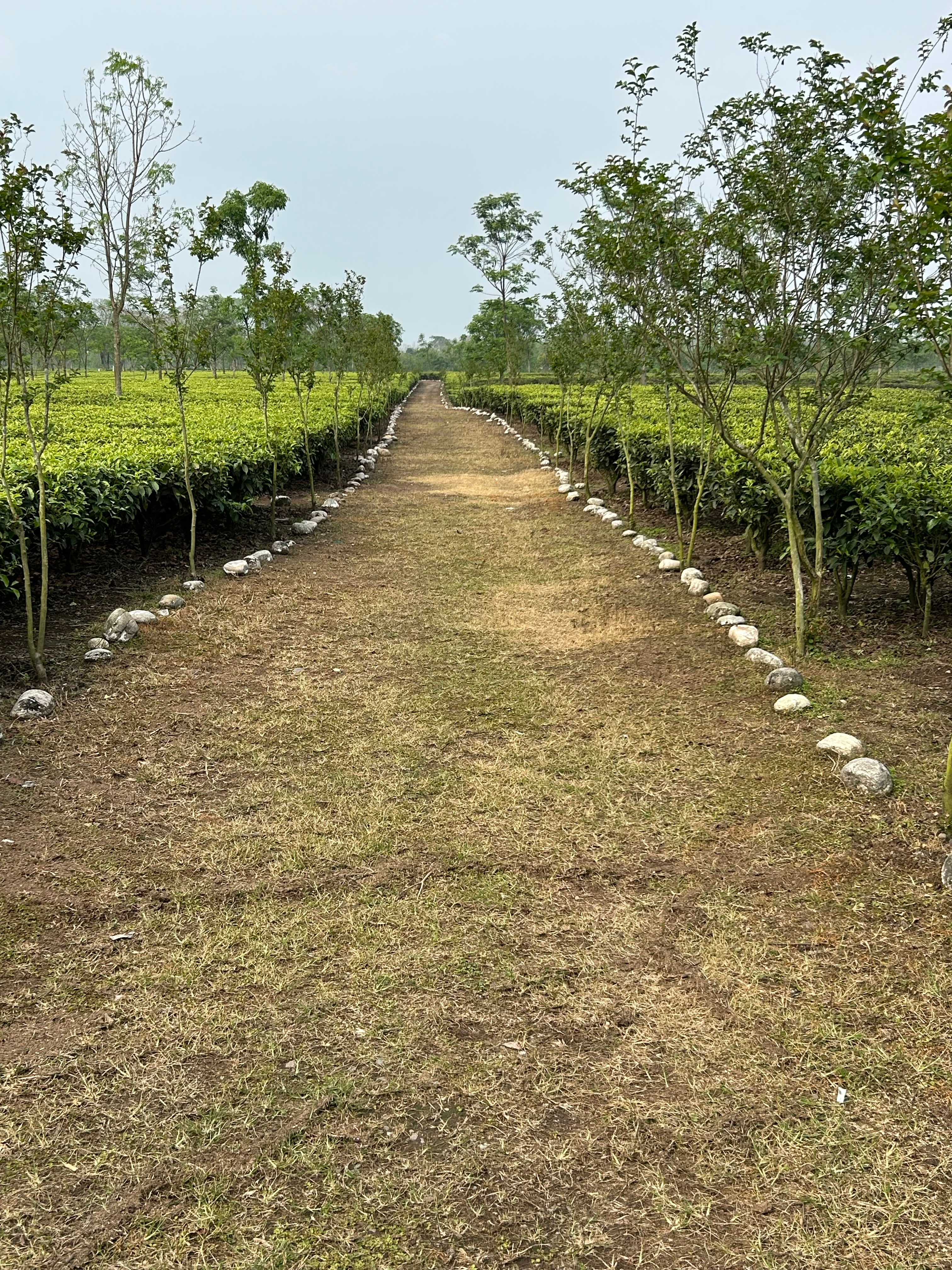
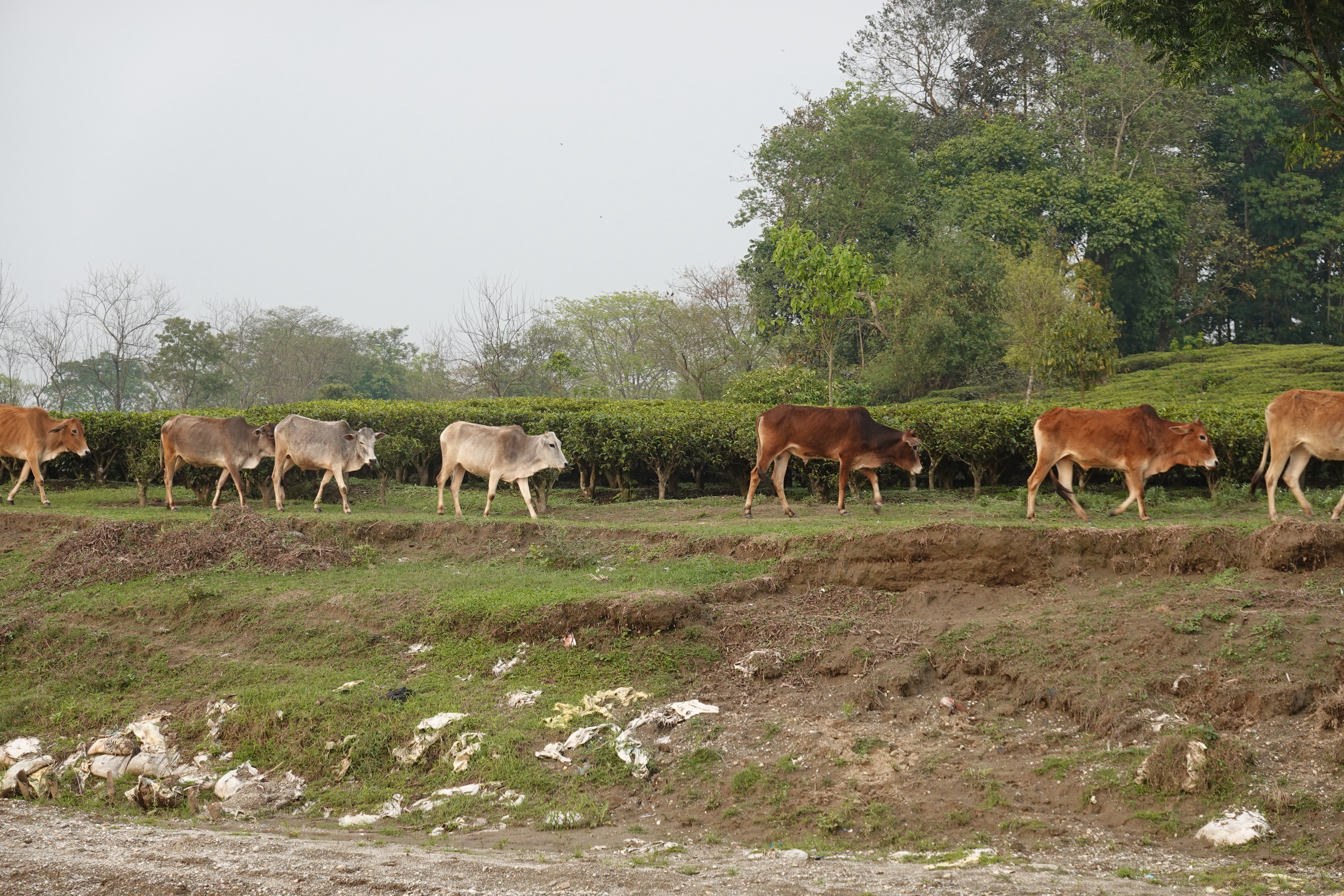
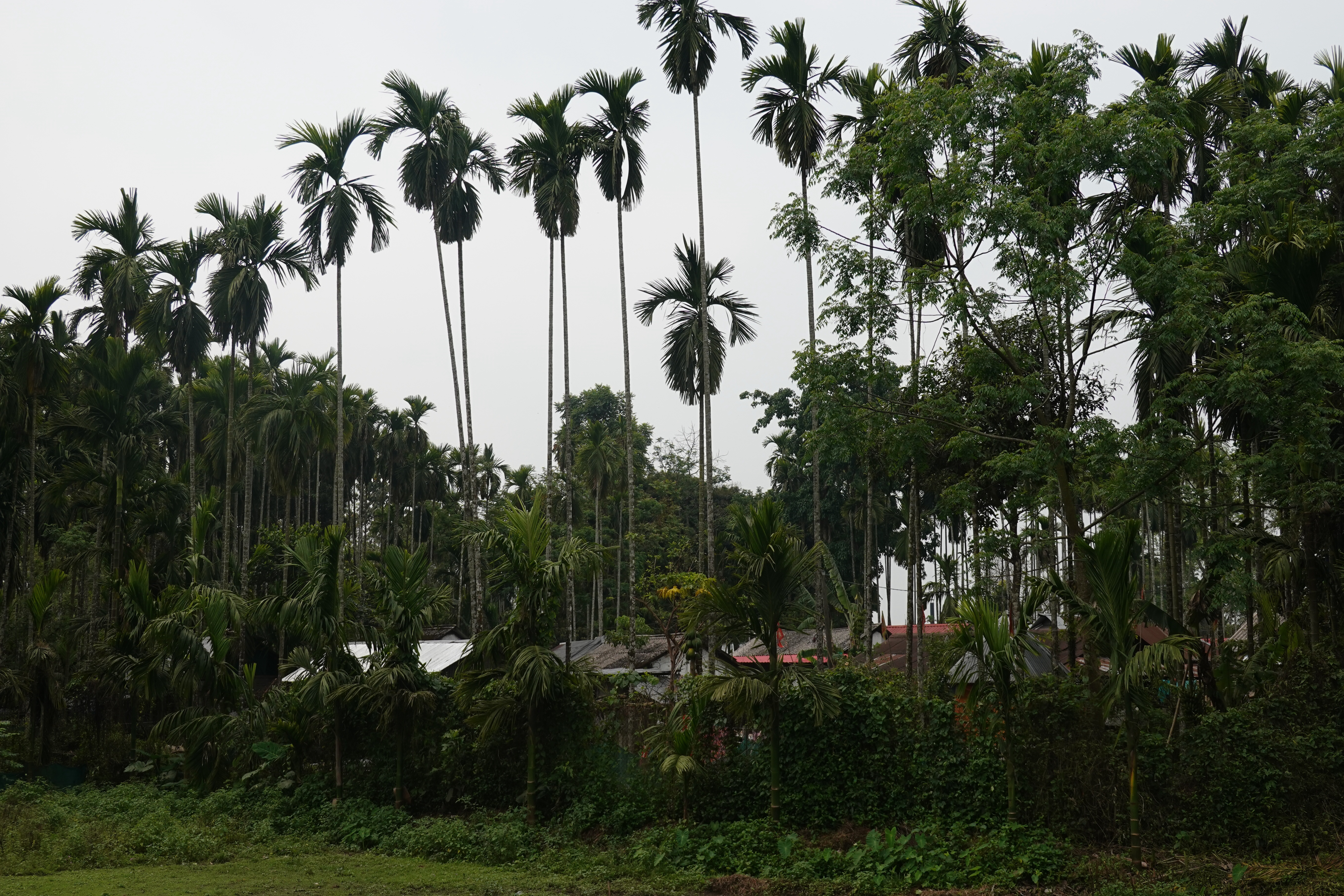
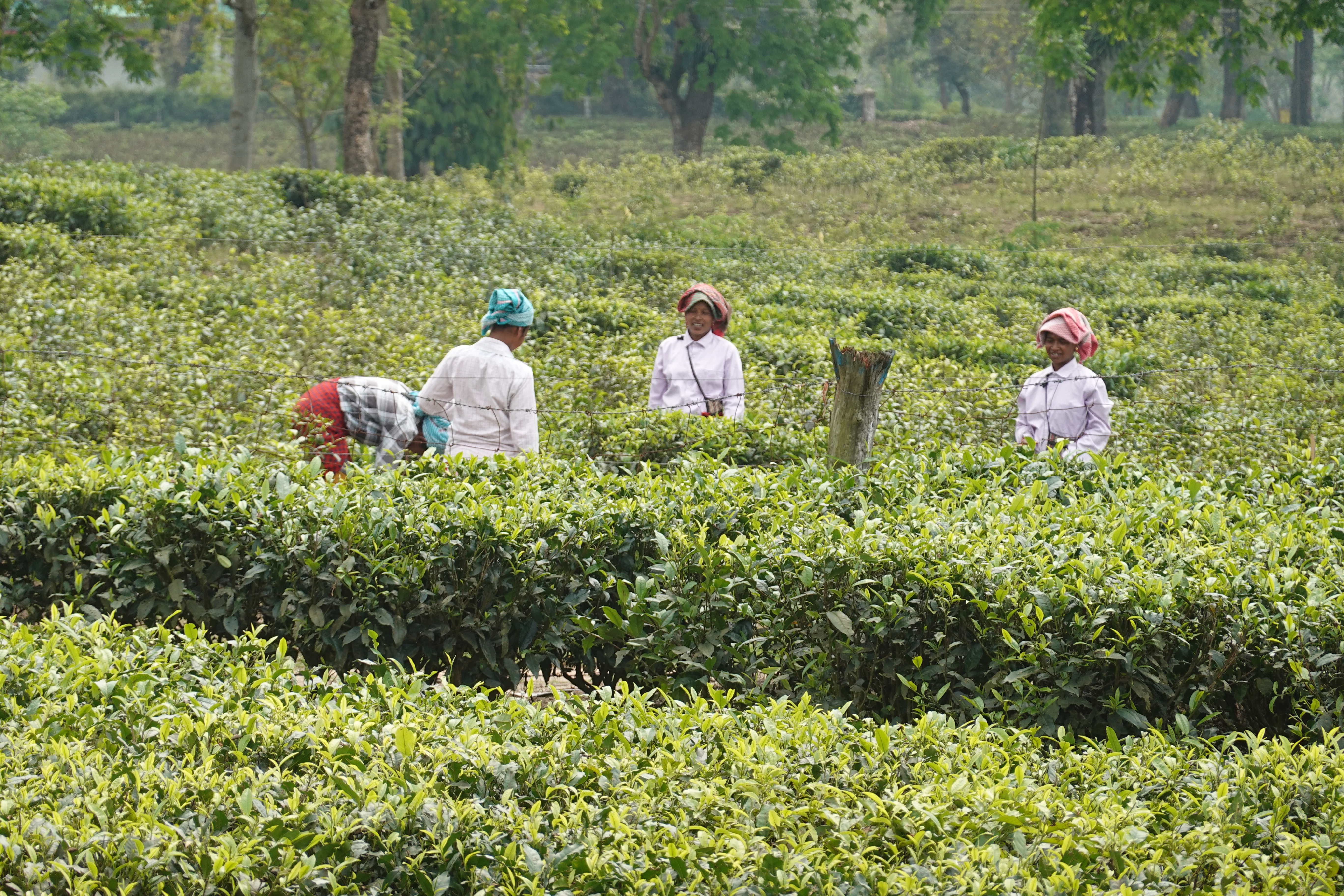
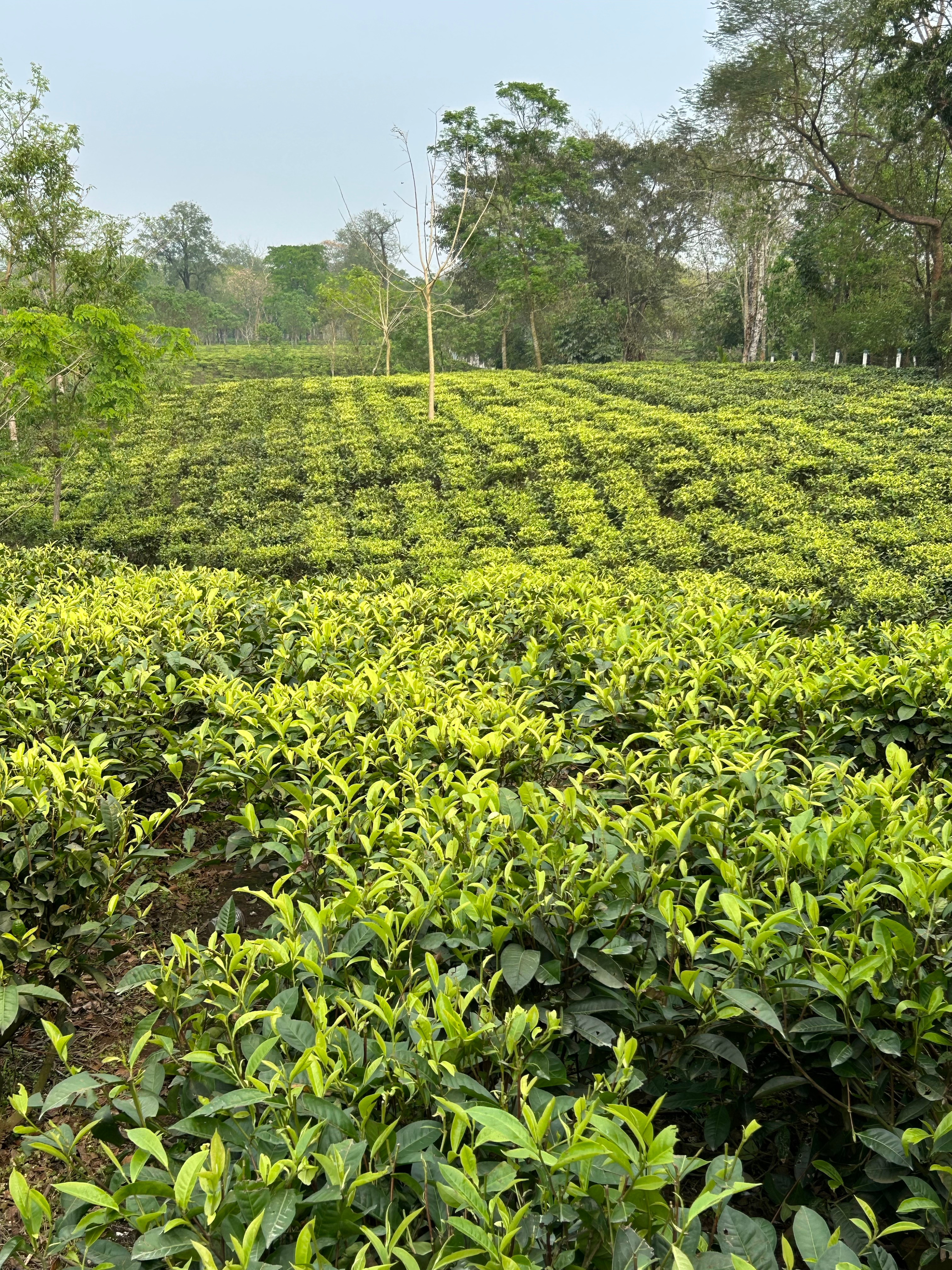
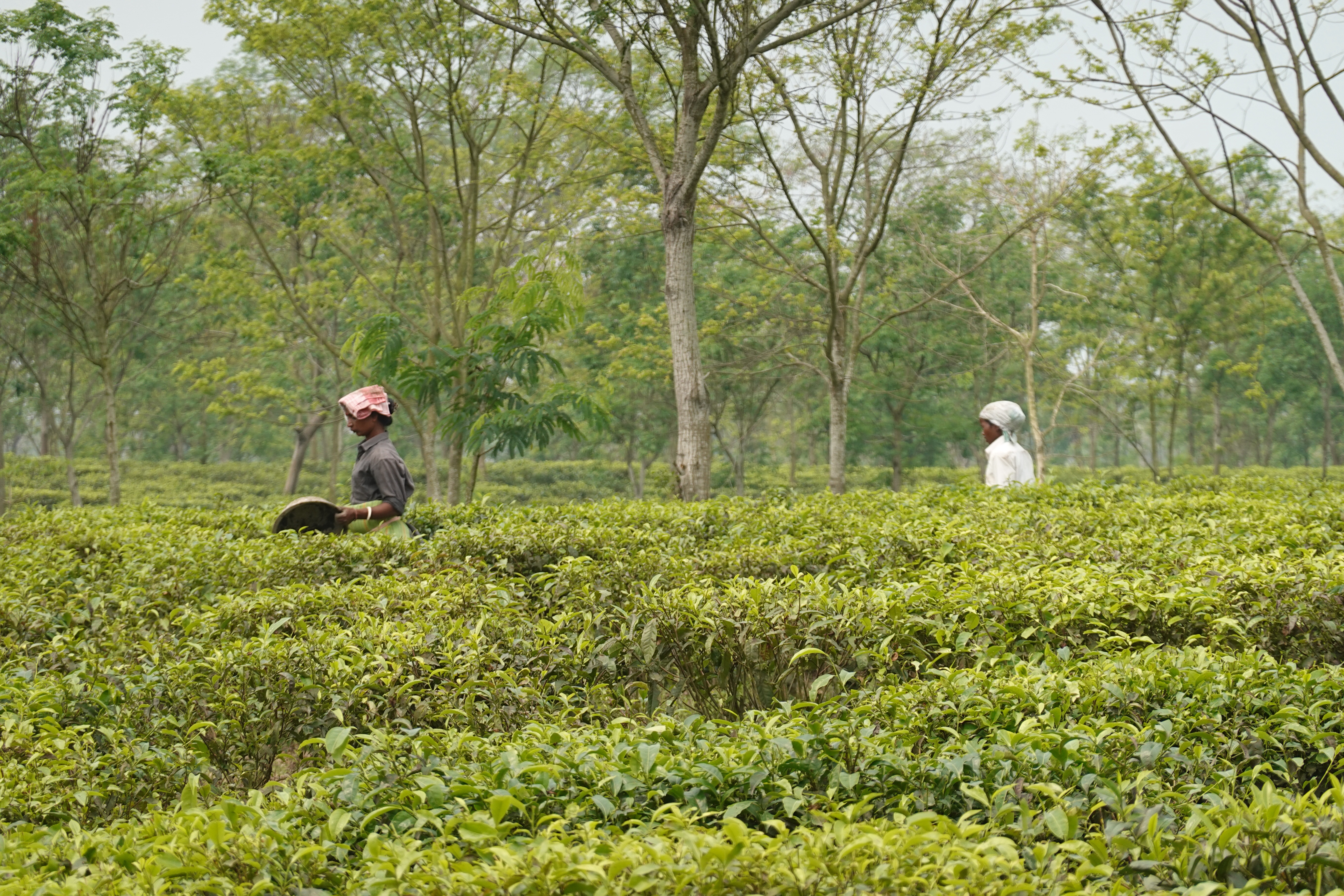
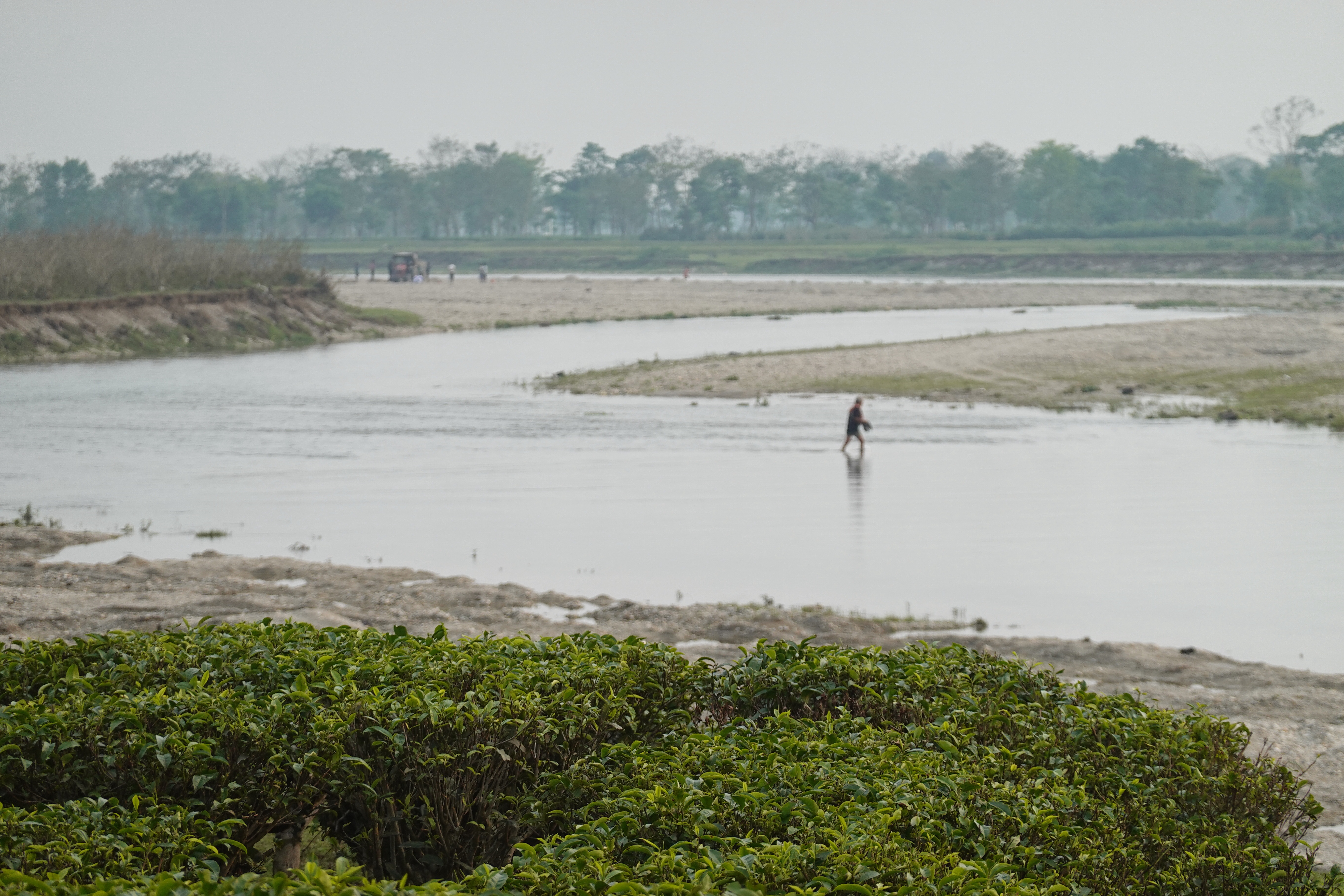
In Part One of this post, we arrive out of the so called foothills, where we were often staying at above 2100 meters / 7000 feet, and reentered the lowly plains at about 300 meters. We head east through the little neck of India that squeezes between Bangladesh and Bhutan on its way to the remaining far eastern states. The land is flat, the roads are straight, and the broad river beds are shallow and wide and consist almost entirely of rocks and pebbles awaiting the monsoon onslaught. There are “Elephant Crossing” signs on the highway. And there is tea. Everywhere. Left and right as far as the eye can see, in fields flat and undulating and studded with acacia trees to give some shade, for kilometre after kilometre along every road.
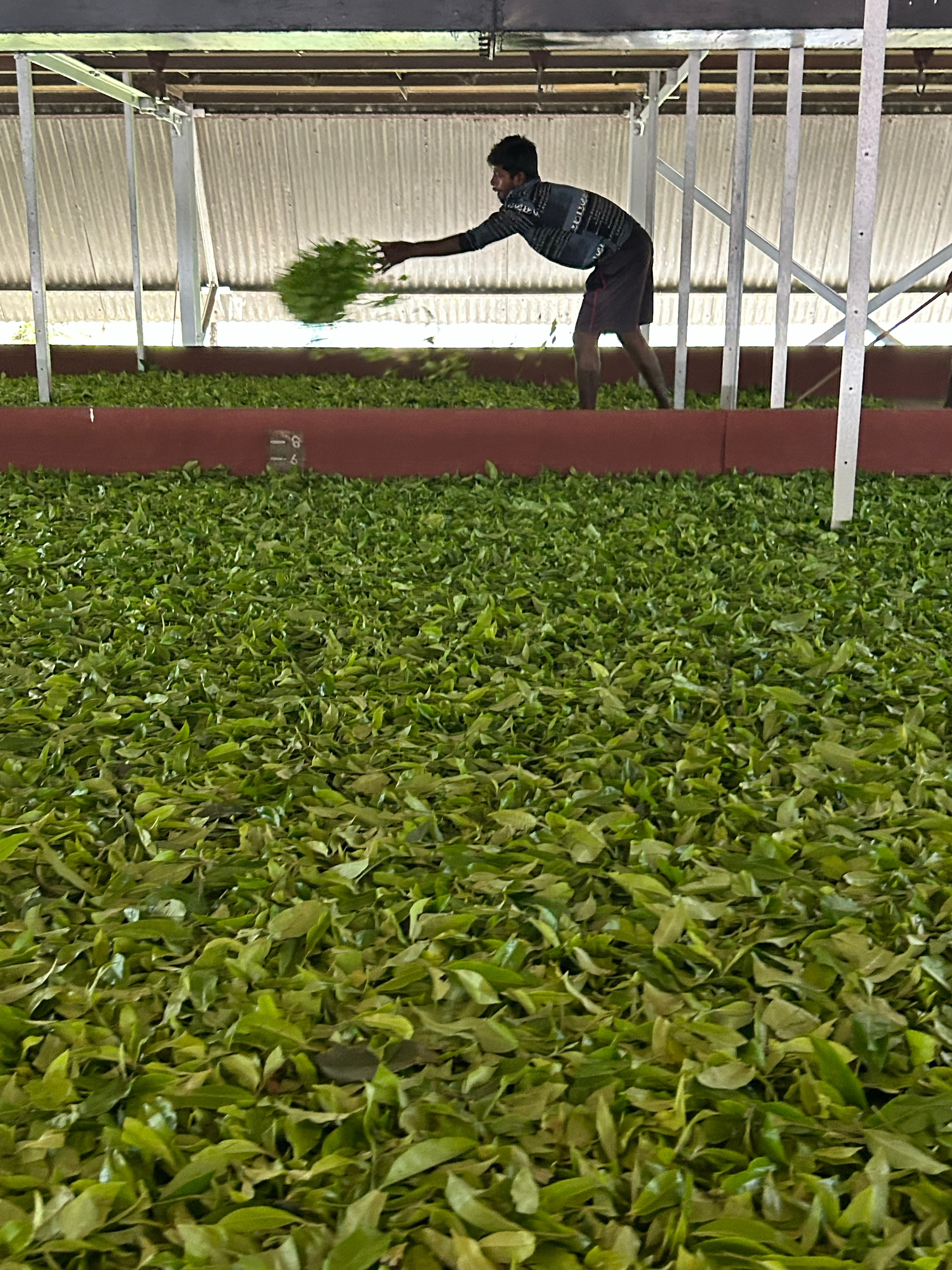
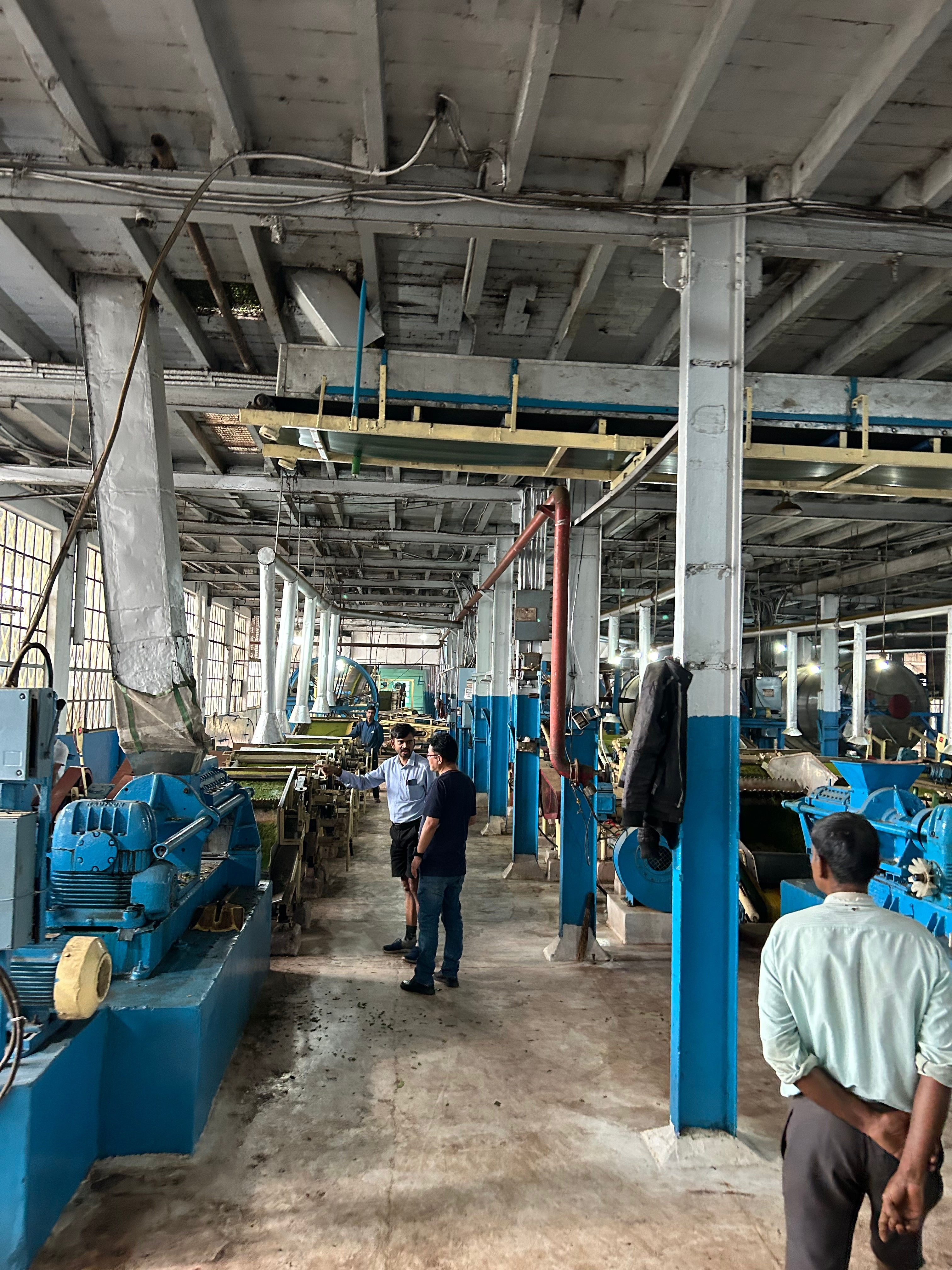
So it is perhaps not surprising that we spend a couple of nights on a tea estate, enjoying the benefits of two words donated from Bengali: bungalow and verandah. This place was a mere 1250 acres of tea, with a big processing facility on site. This tea is Assam tea, and our Darjeeling guide was none too impressed. He had already told us that, unlike Darjeeling tea, Assam tea was too horrible to be drunk without milk, and was really only fit for making chai, though we drank it clear and it was just fine. He also pointed out that unlike Darjeeling tea leaves, which are small and delicate and require finesse in the plucking, Assam leaves are large and coarse and can crudely be plucked by the most careless of pluckers. And unlike in Darjeeling, the Assam leaves go through a process known as curl, turn and crunch, or CTC to the initial loving Indians, which ultimately reduces it to either a coarse granular mix or else a mere powder (dismissed as “dust”) fit only for tea bags. Insert sad head shake here.
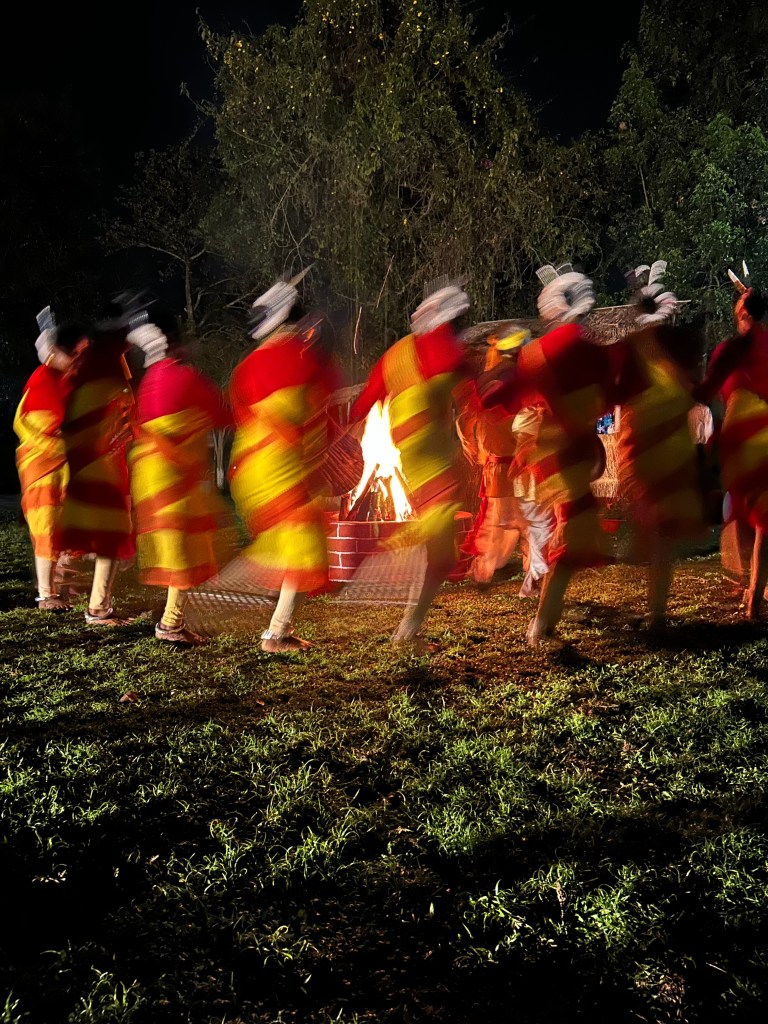
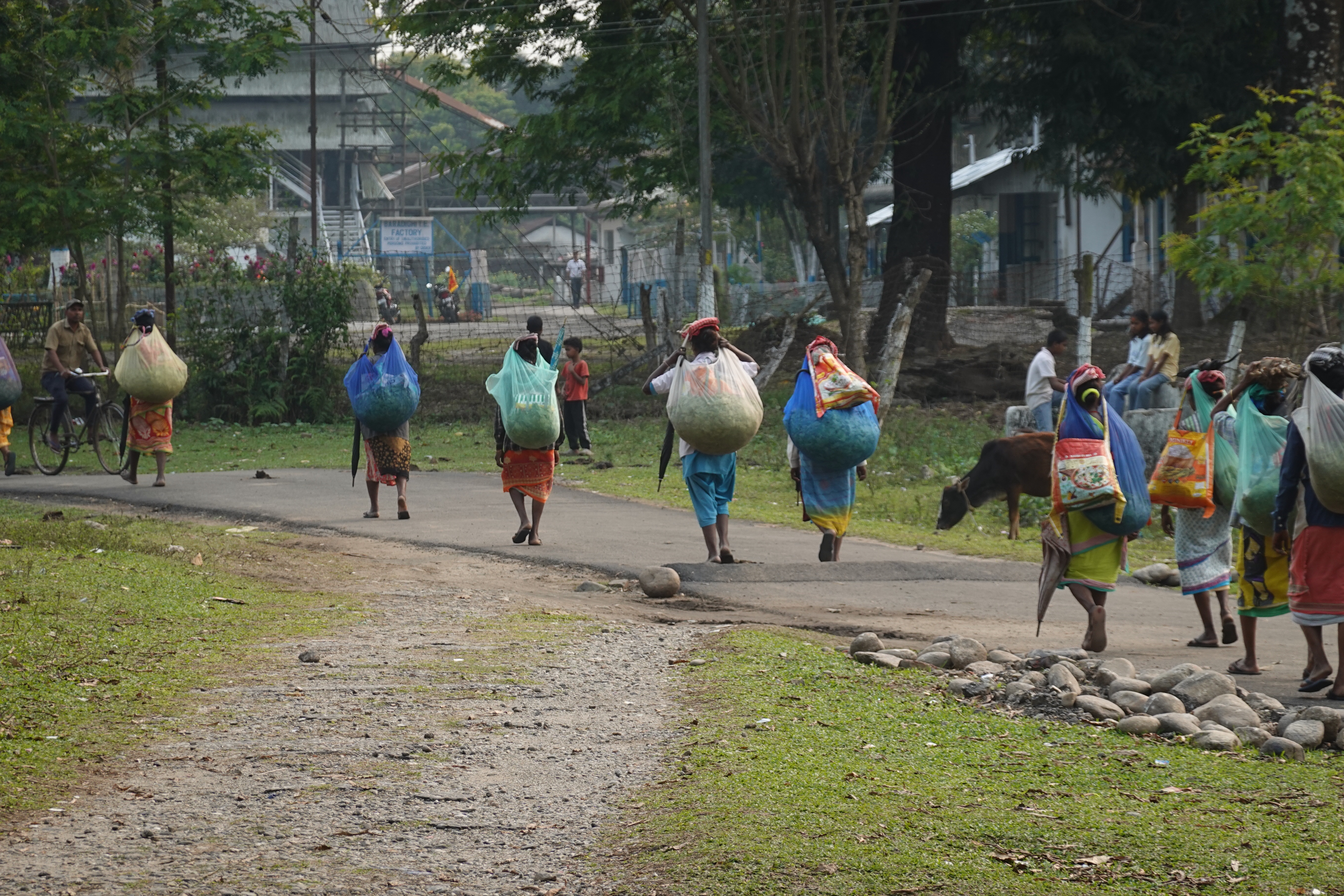
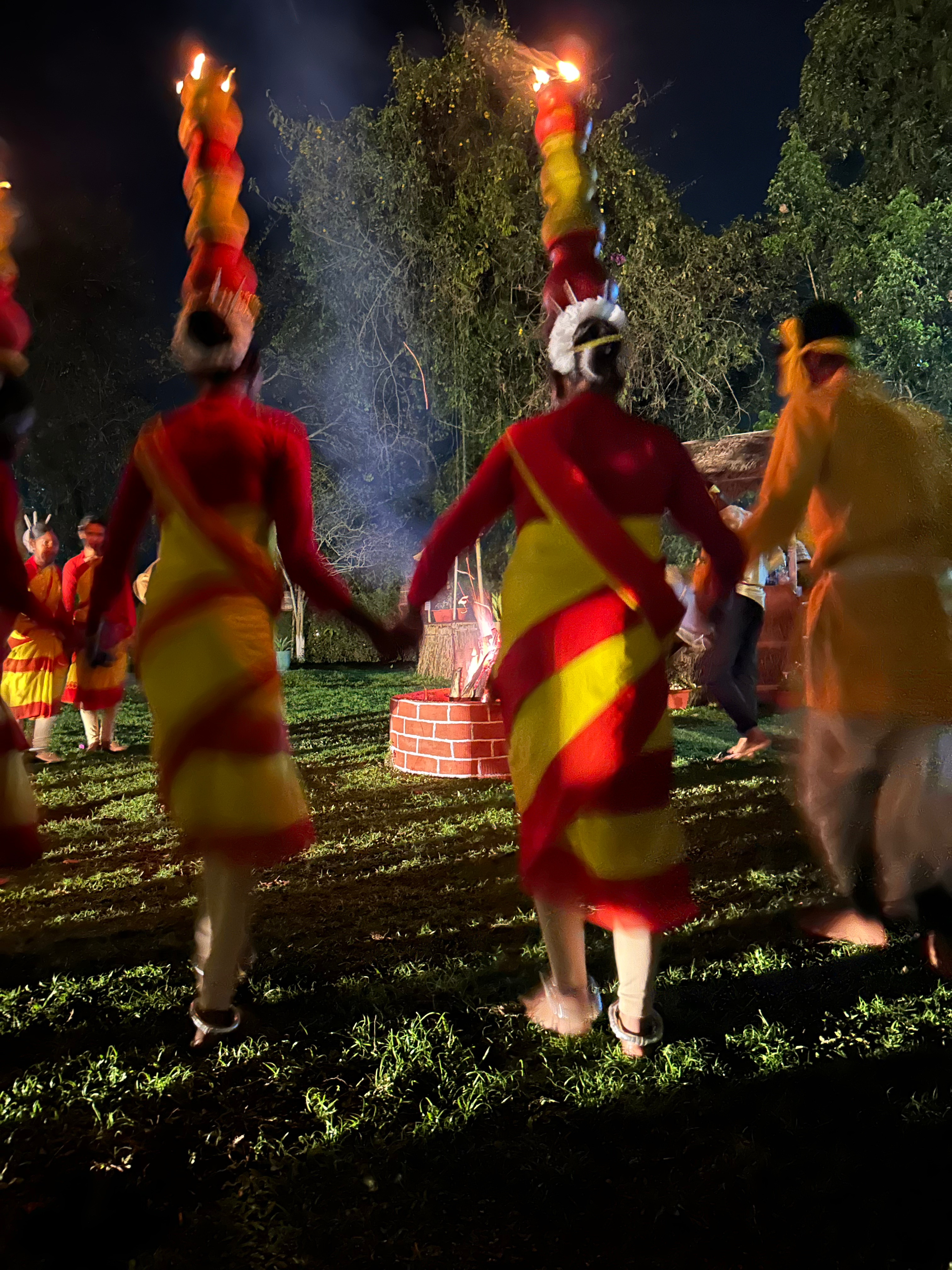
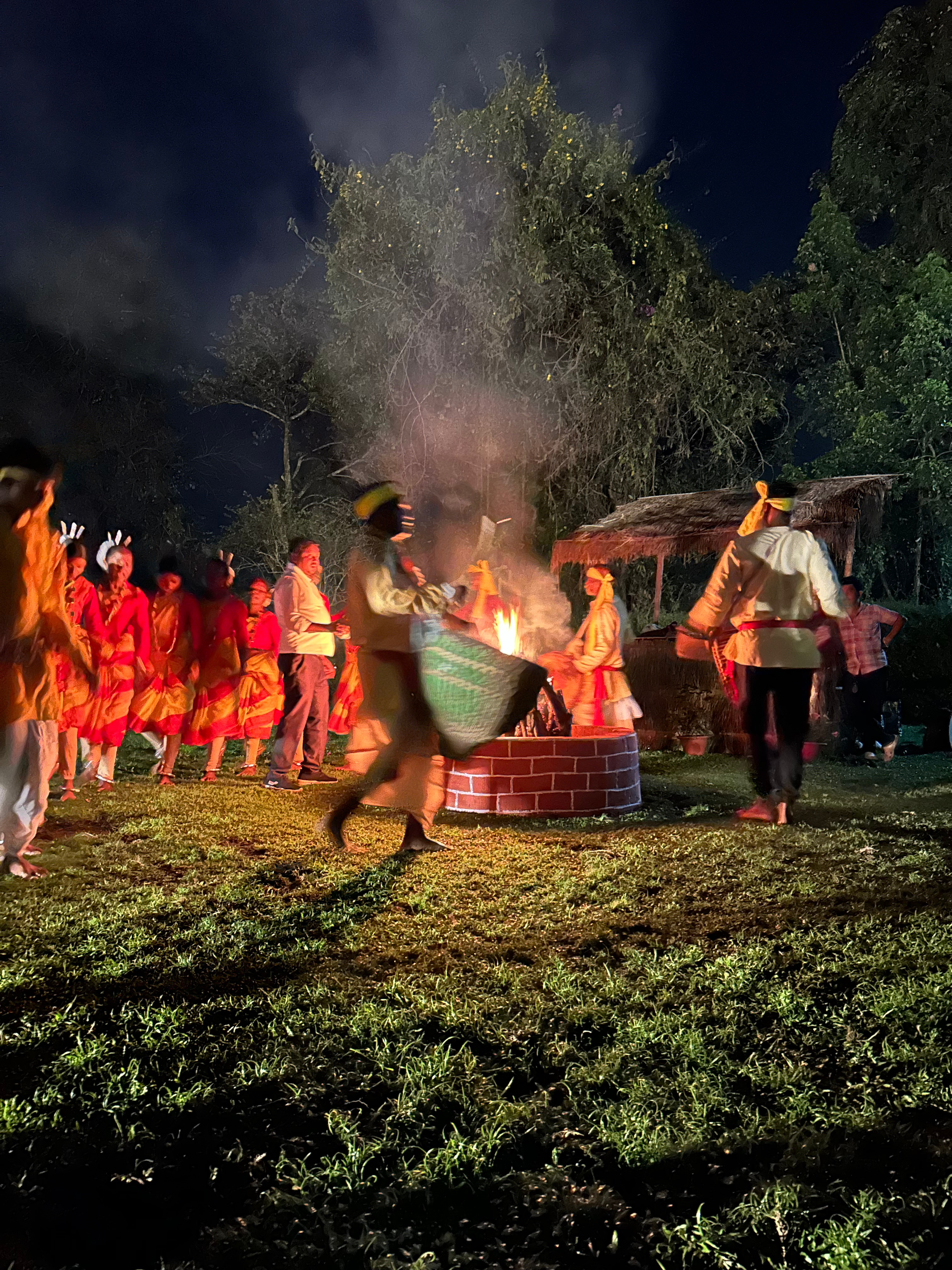
Most of the thousands of workers on the tea estate live in a collection of villages on or near the estate. Most are apparently what Indians refer to as “tribal”, with members of their tribe having been recruited for the estate 135 years ago. They have their own language and a set of unique customs and rituals and those include a series of dances designed for specific events – feast days, weddings and the like. A group of drummers and dancers came over one night to do a demonstration – admission was a donation to the village school – and it was pretty amazing, especially a dance done with flaming candles balanced on holders on their heads and another involving intricate stick tapping with one’s forward and then rearward neighbour in rapid succession. And that’s not all, as they say in the infomercials: Part Two is below.
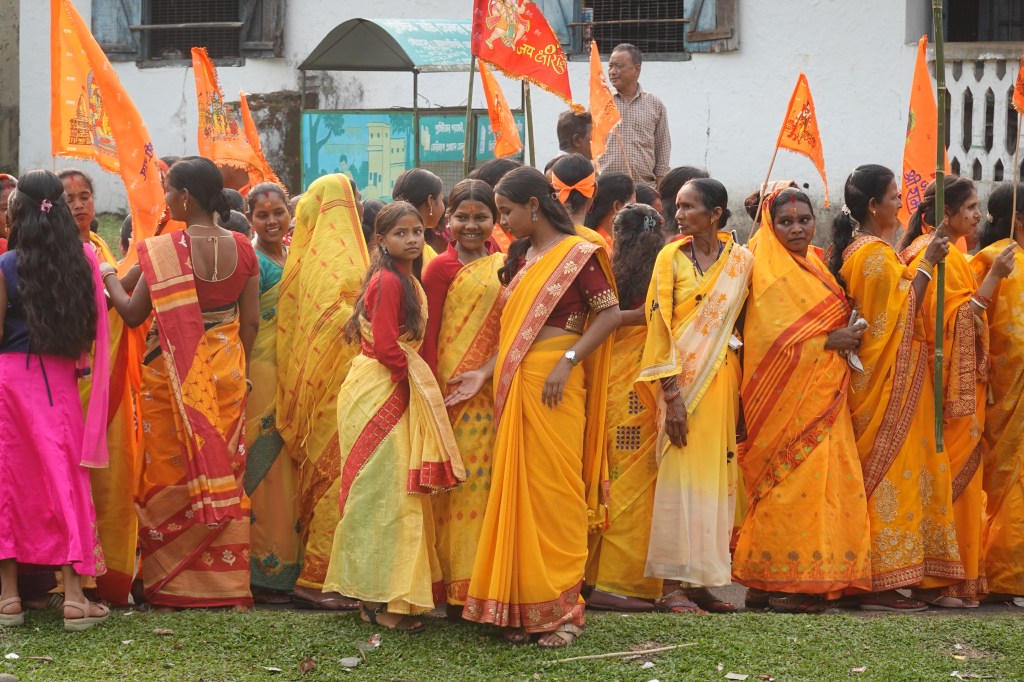
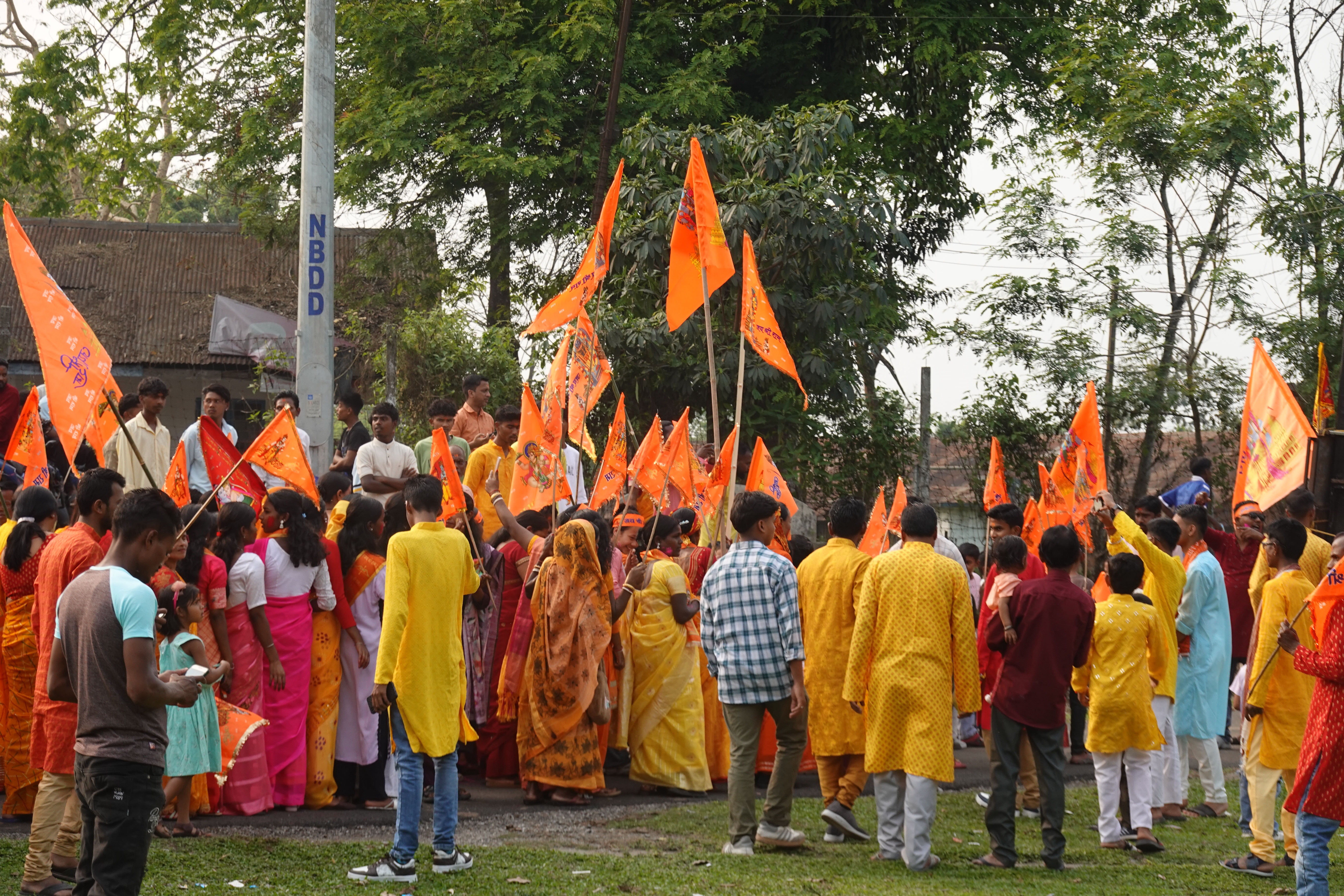
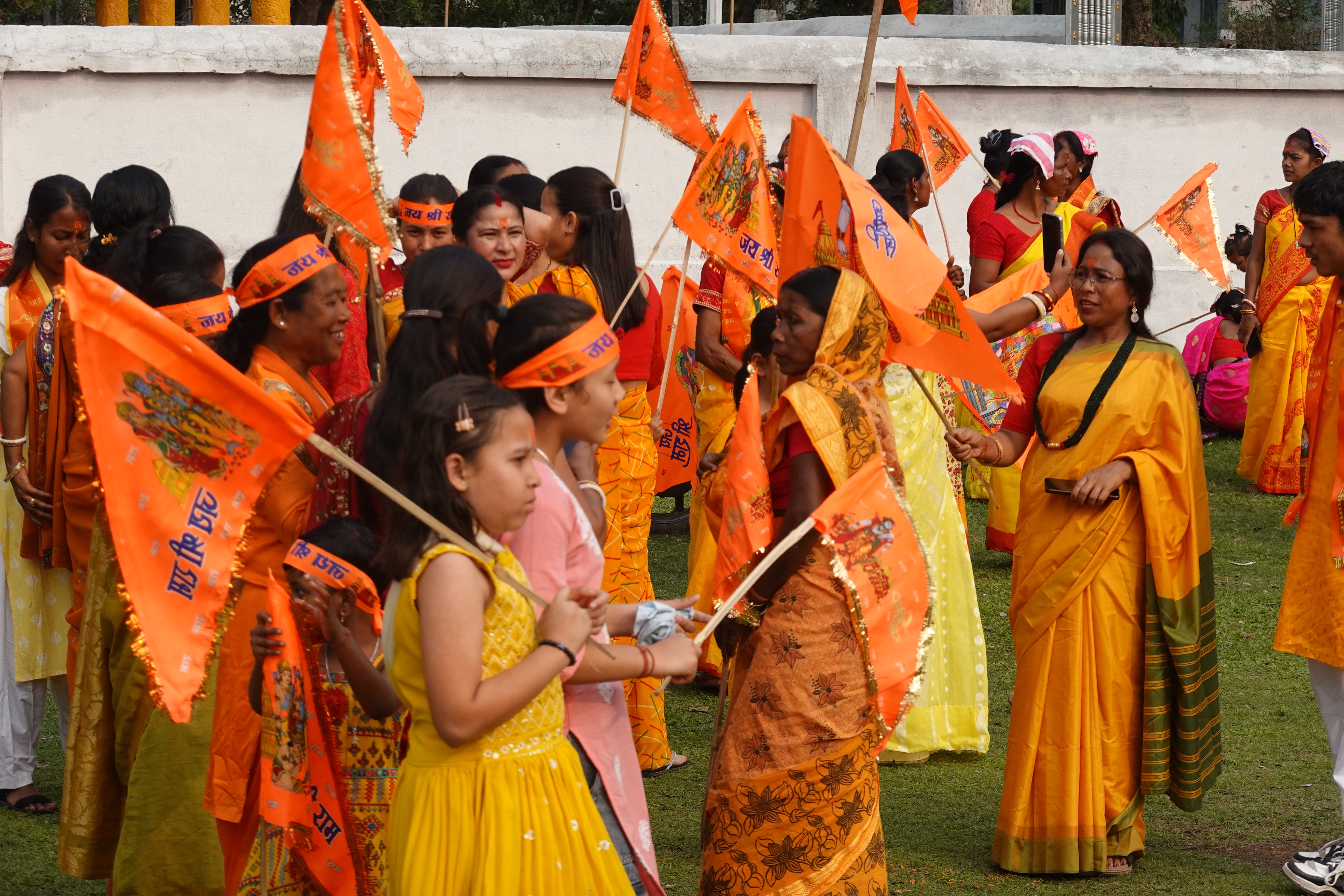
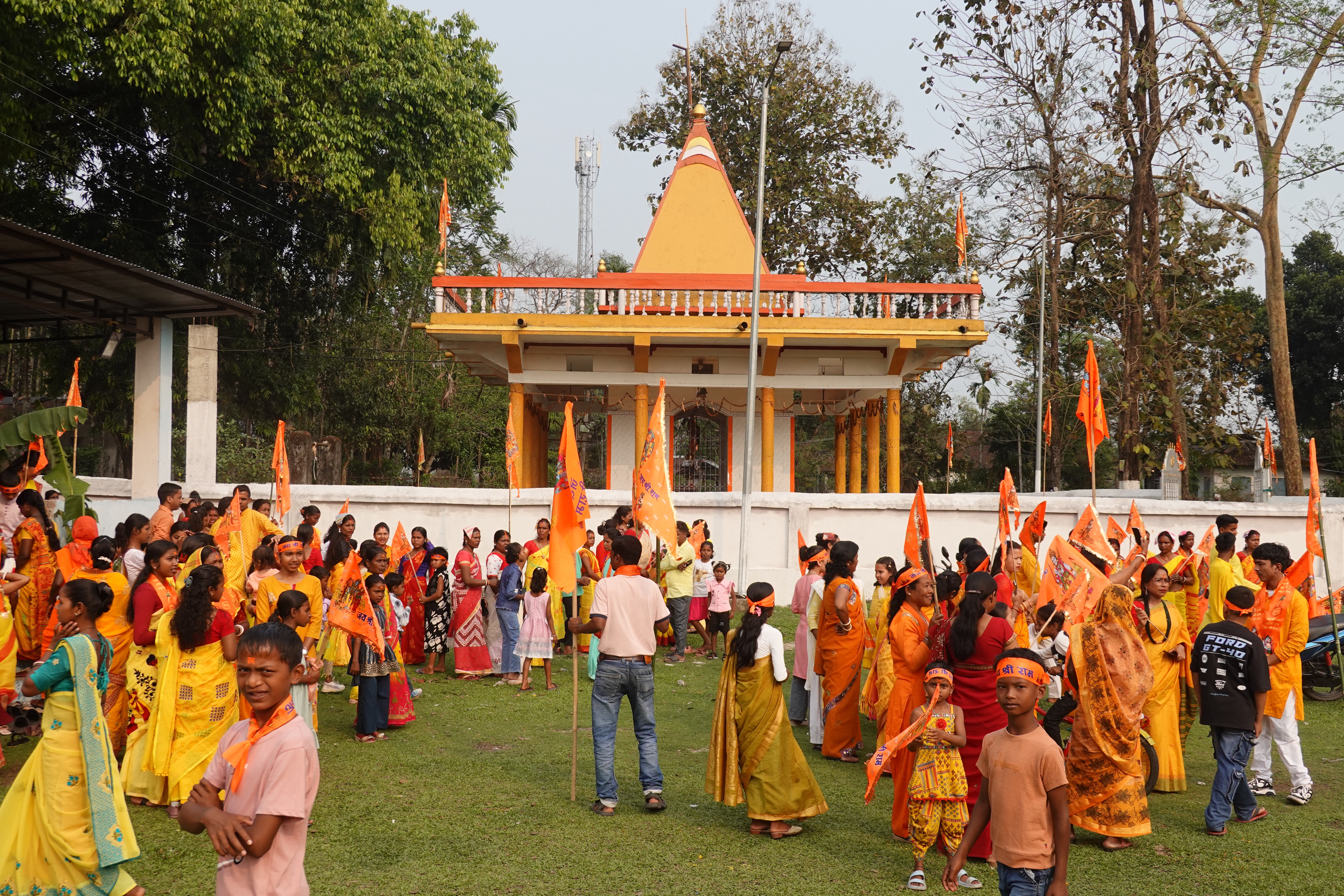
So a good chunk of the local villagers are Hindus, and the local shrine is dedicated to Rama (a manifestation of Vishnu). And we were there on Rama’s birthday. There are a number of days of fasting leading up to the big day, which is marked by a huge celebration ending with being able to eat again at the end of the afternoon. Throngs of people, all dressed up, and a truck with a crazy loud sound system that was clearly too much for even the giant speakers mounted on the back as they sounded frayed and blown out which just made the MC crank the volume up to 11. There is a short video at the end of the procession – turn up your speaker to get a bit of the flavour.
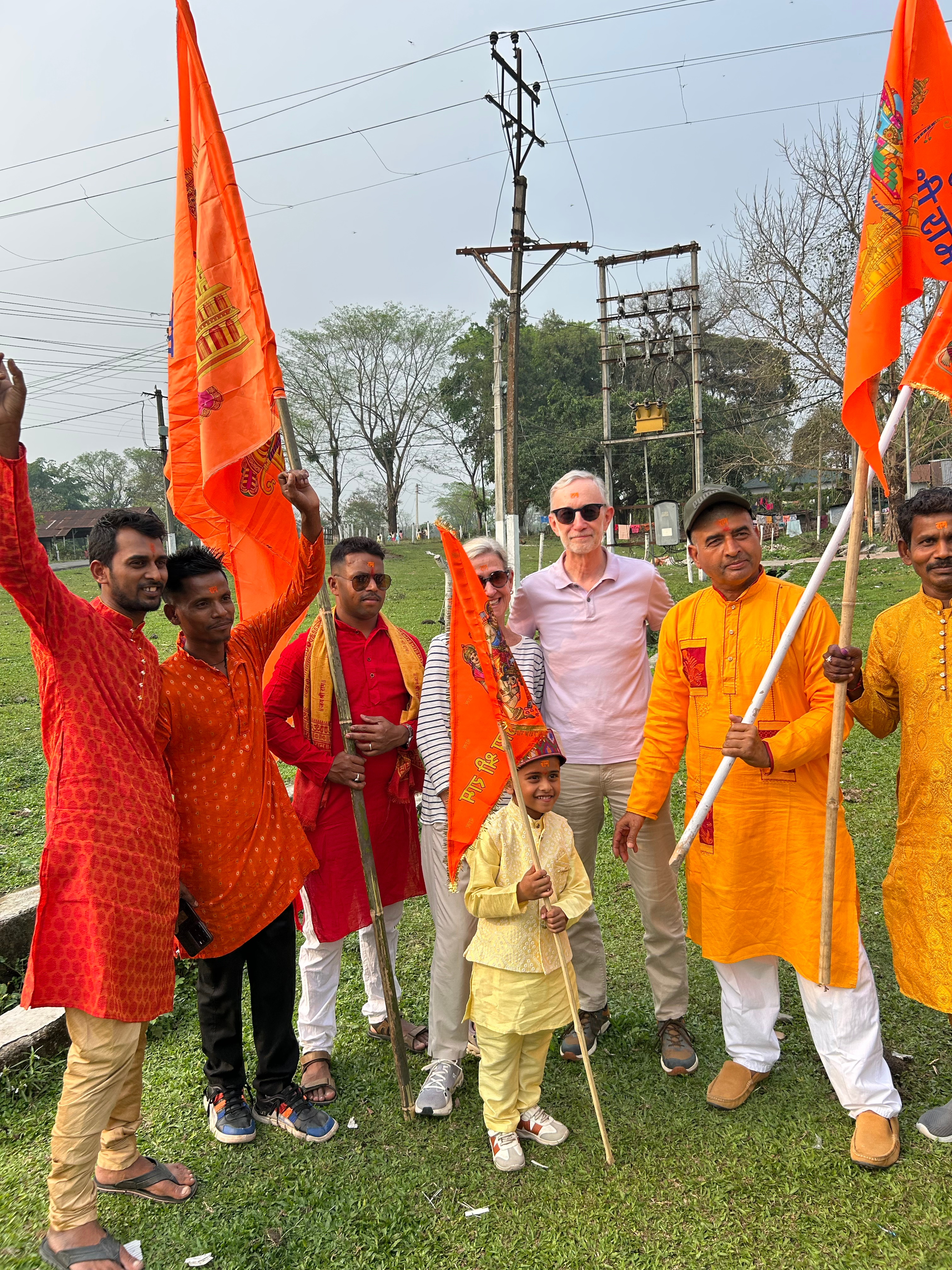
As often happens we were asked by someone if they could have a selfie with us, and since we were taking pictures of the crowd it seemed like poor form to say no, so we said yes and then the absolutely inevitable happened and as soon as the first guy moved in a whole crowd of people joined him and there was an equal crowd taking the pictures and then the next group came in and so on until a group of of 8 year old boys moved in at the end and after their pictures were taken they each came to each of us and shook our hand and said it was nice to meet us. It doesn’t take a lot of insight to realize that you are from another unimaginable planet and the requests for pictures always make this point.
 bengalbhutanblog.ca
Leave a comment