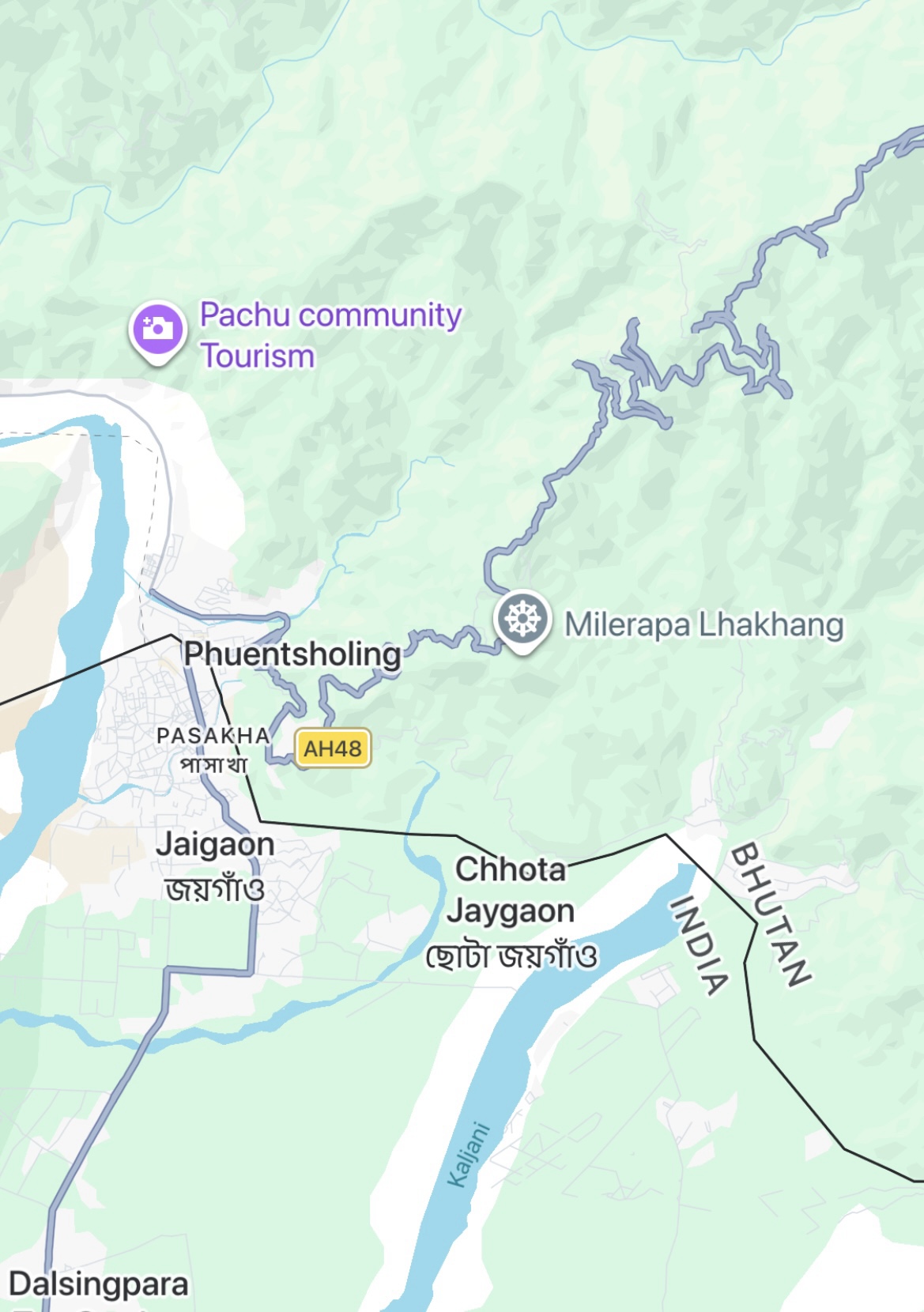
Well we crossed over from India into Bhutan the other day and it was a bit like the moment when Dorothy realizes she’s not in Kansas anymore. The map suggested some calm straight roads in India, up to the border town of Jaigaon, followed by some serious craziness to follow on Bhutan’s first highway and its only real land link to the rest of the world. But that told only part of the story. The road to Jaigaon was indeed flat and straight and well paved and blessed with the ultimate waste of Indian paint: lane markings. But at the outskirts of Jaigaon that all ended, and the main road through this busy but run down and beaten up trading town became something that looked and felt like someone had dug it all up, poured a lot of fresh concrete and then, before it dried, held a plowing match on it with water buffalo and followed up by using it for artillery practice before letting it set, after which it was covered in dirt to ensure dust when it was dry and mud when it rained. We pulled up to a lightly labelled building which was Indian immigration, as you need to check out, and went into a room with counters marked “Arrivals” and “Departures” but no one working as it was still before 10:00. Soon a lone clerk appeared, who went to work at the Arrivals counter and then, when that line was cleared, got up and walked two feet and sat down at Departures. Many stamps later we were out, though we then had to stand in the rain at a booth while a man in a uniform wrote down in longhand about a dozen categories of information about each of us into a large ledger that looked like a book of spells. Then we met our Bhutan guide and driver, and stumbled in the now pouring rain down an alley paved with broken cobbles and lined with shabby shops to a small door in the border wall where a Bhutanese man in a uniform wrote down all of the same information in longhand into his ledger. But then we were allowed to go through into a magical new world with an immigration hall using passport scanners and then we walked out on the other side of the building and we were in Bhutan. It was vertigo inducing: it wasn’t raining on this side of the border; the streets were wide and paved; the traffic was light and orderly; no one honked; there was absolutely no litter; and the shopfronts were tidy and glassed in and prosperous. We were dizzy.
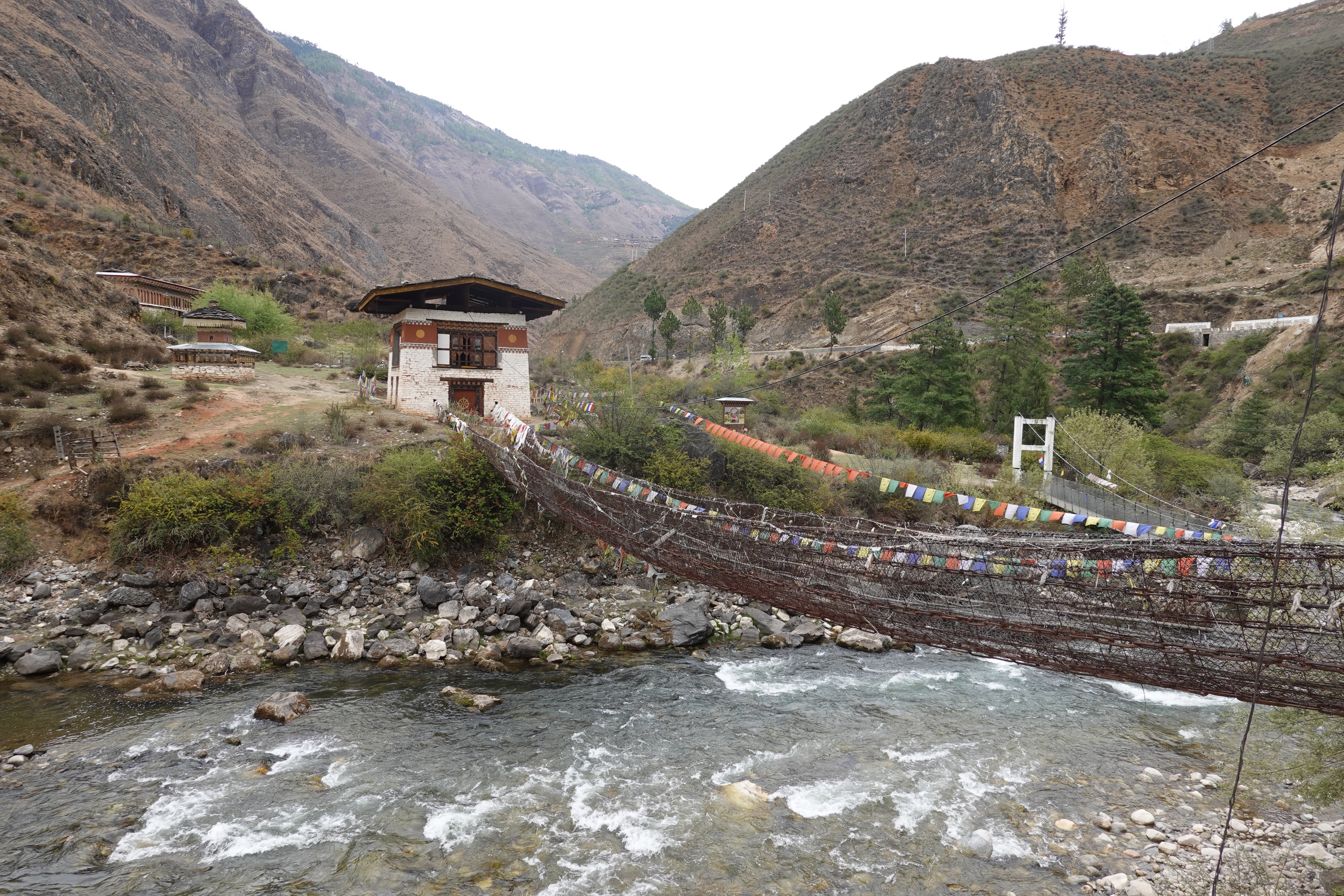
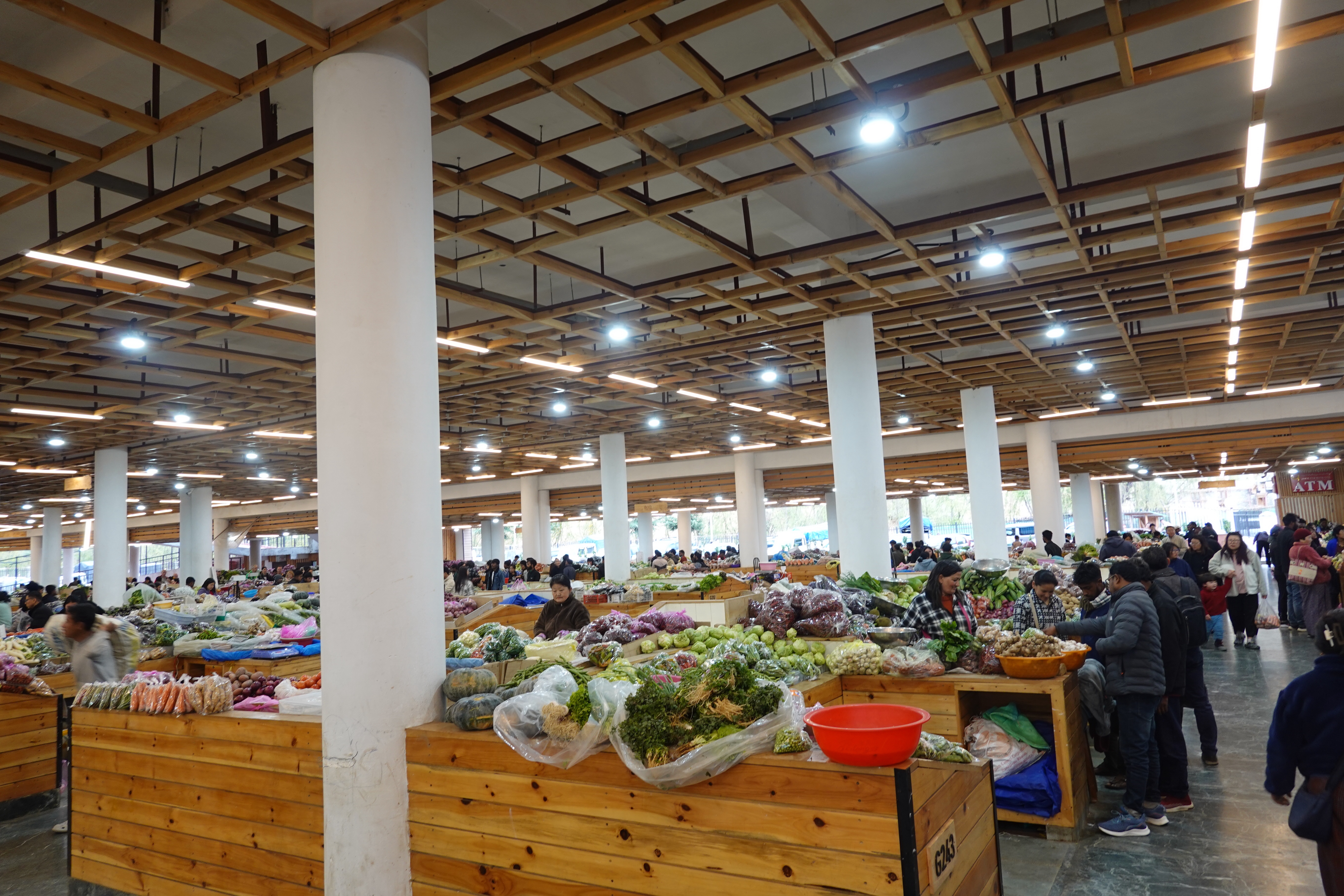
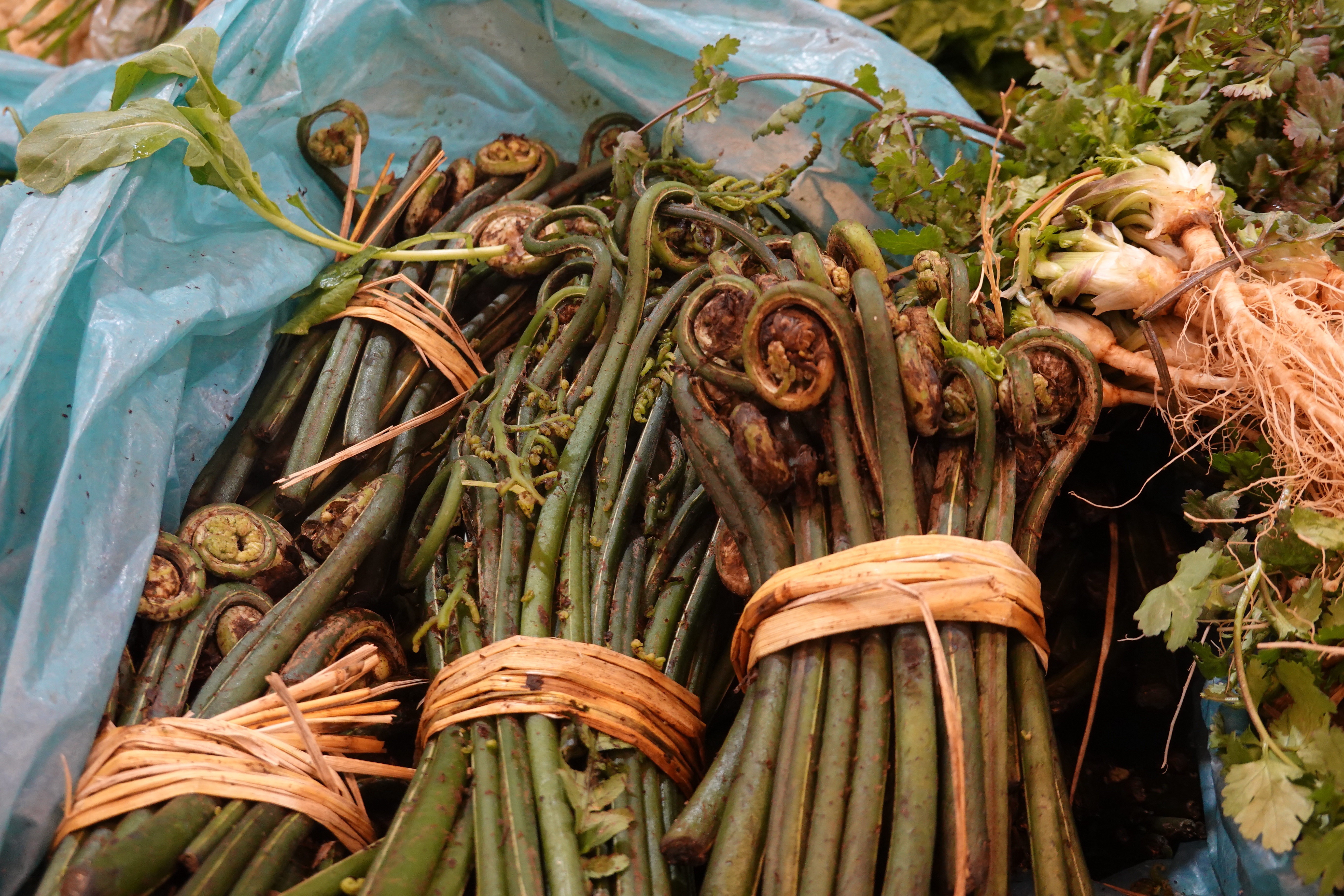
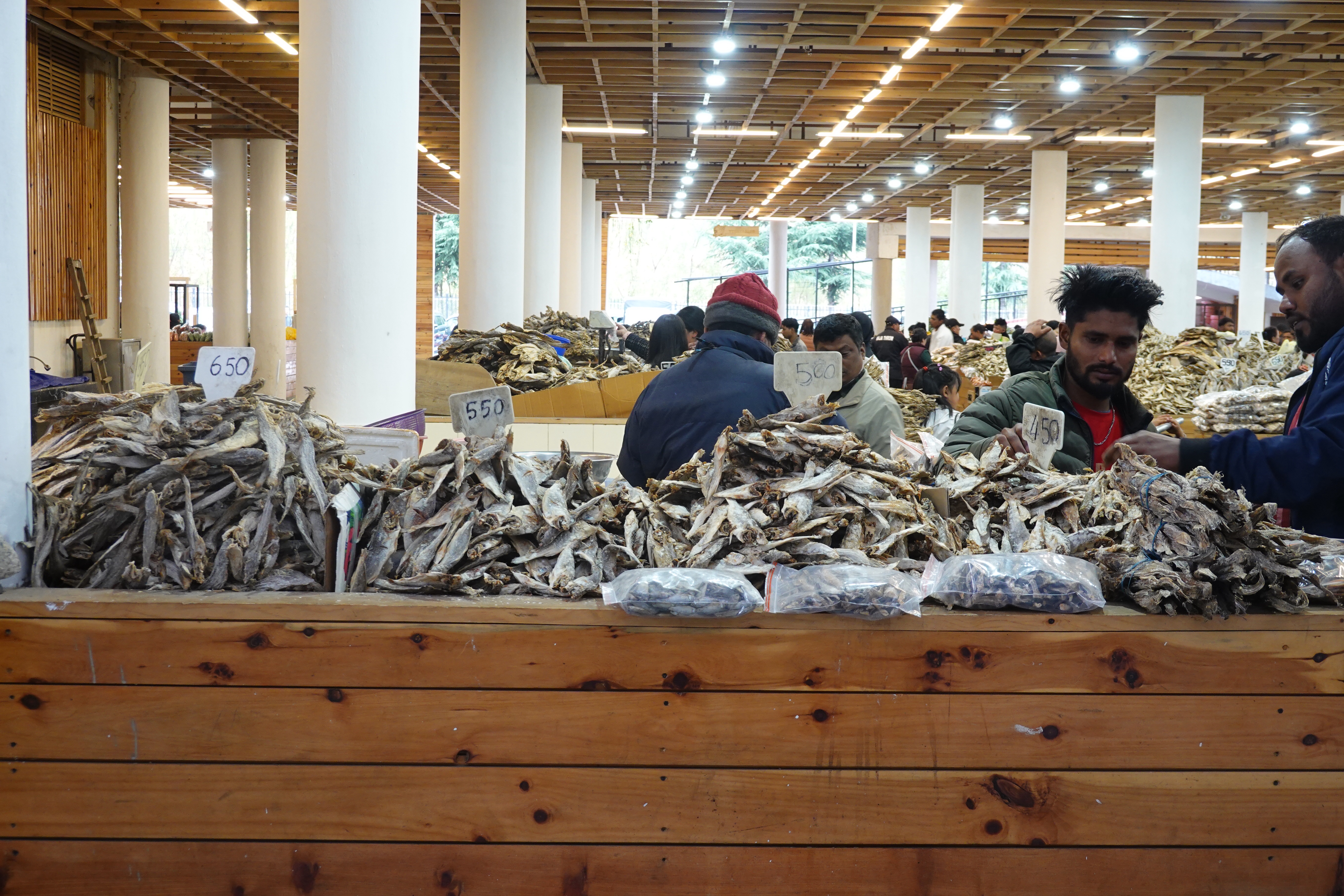
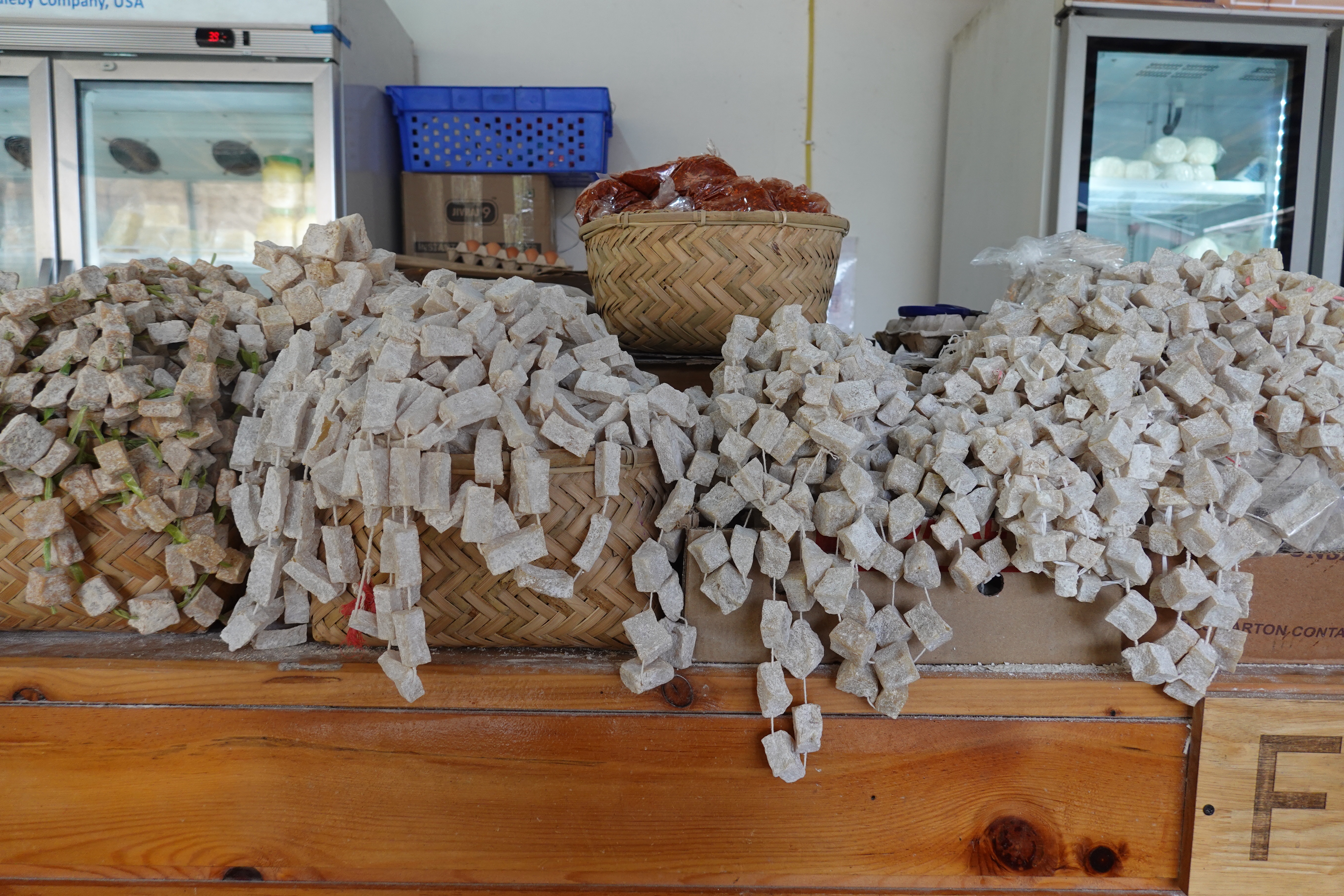
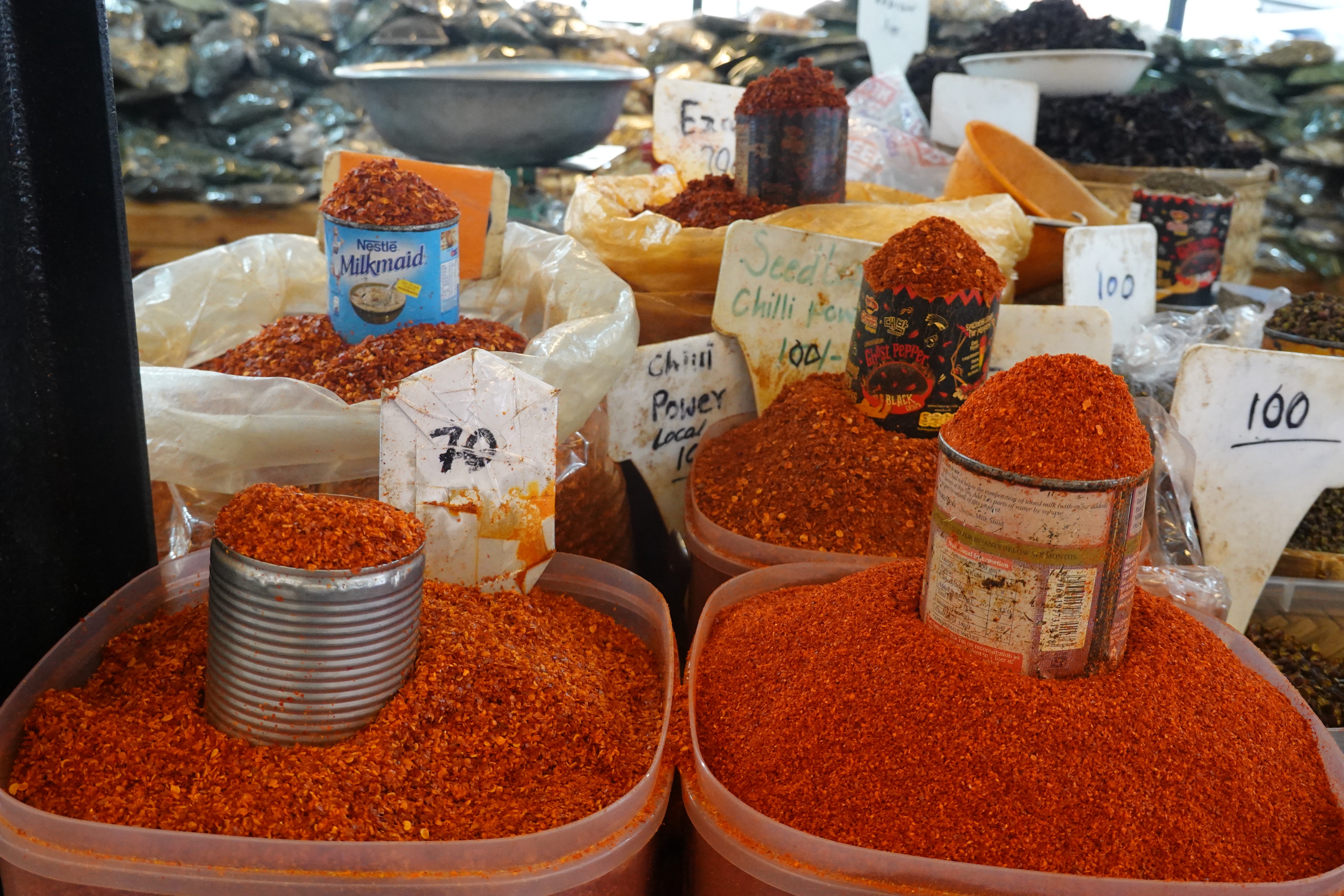
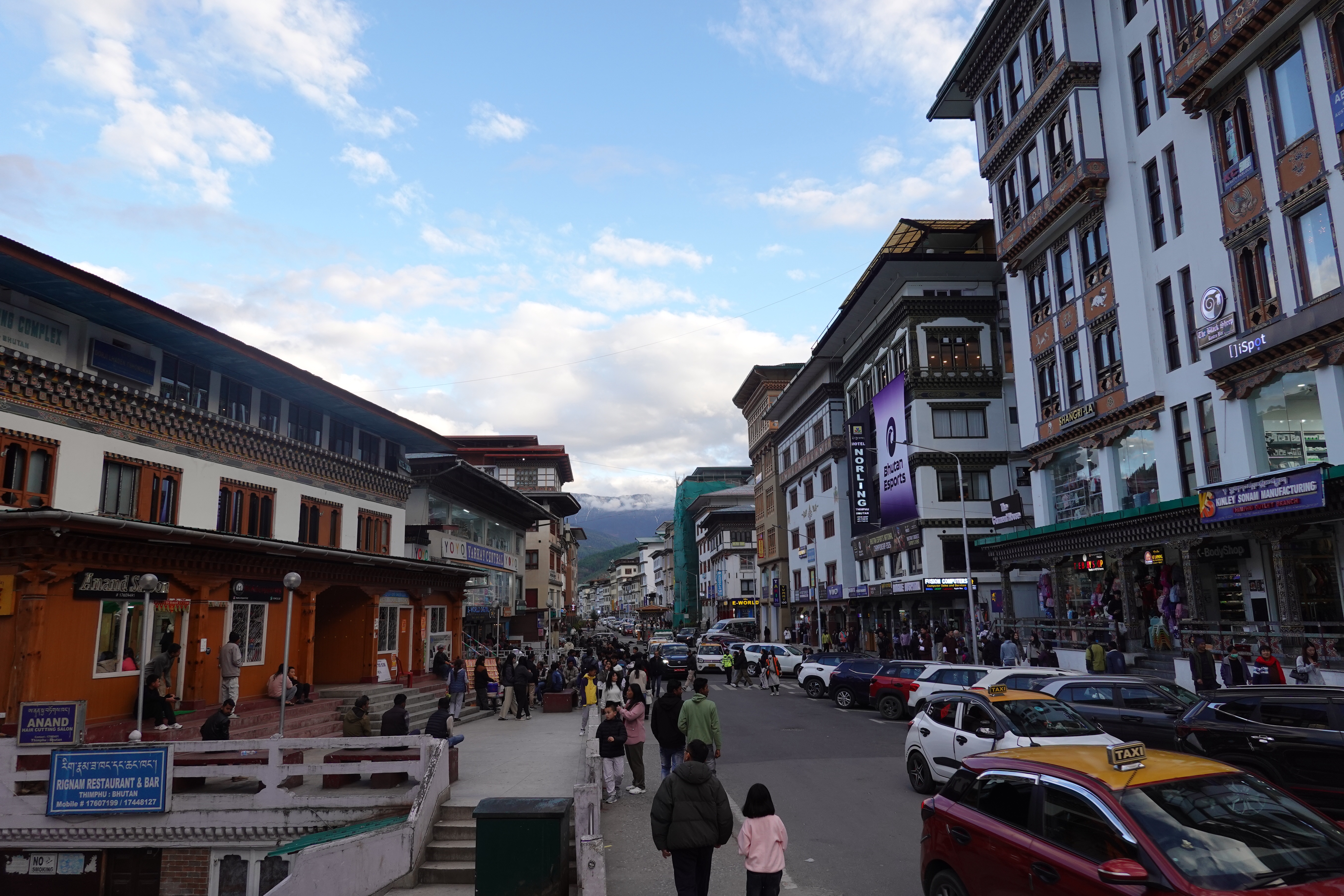
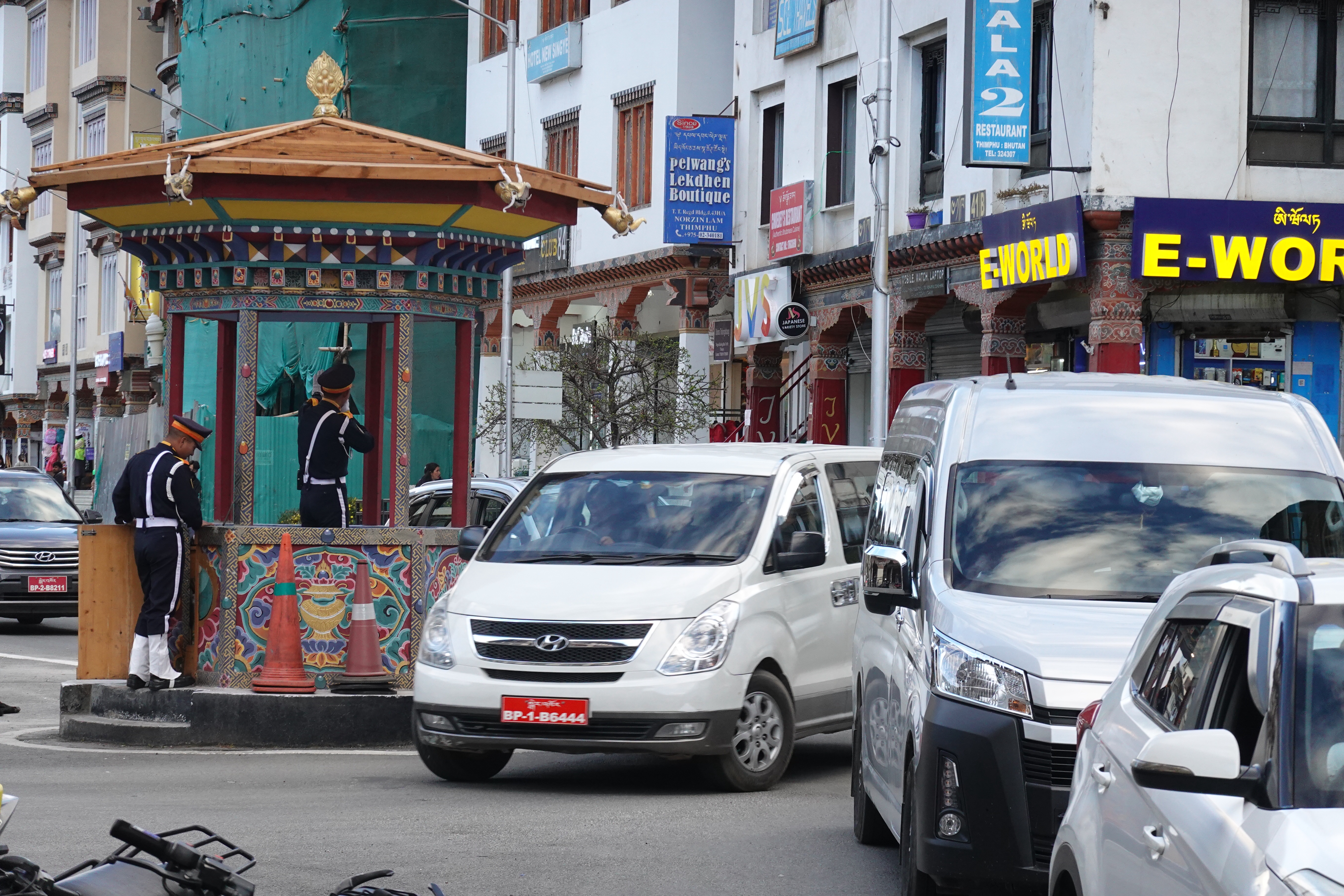
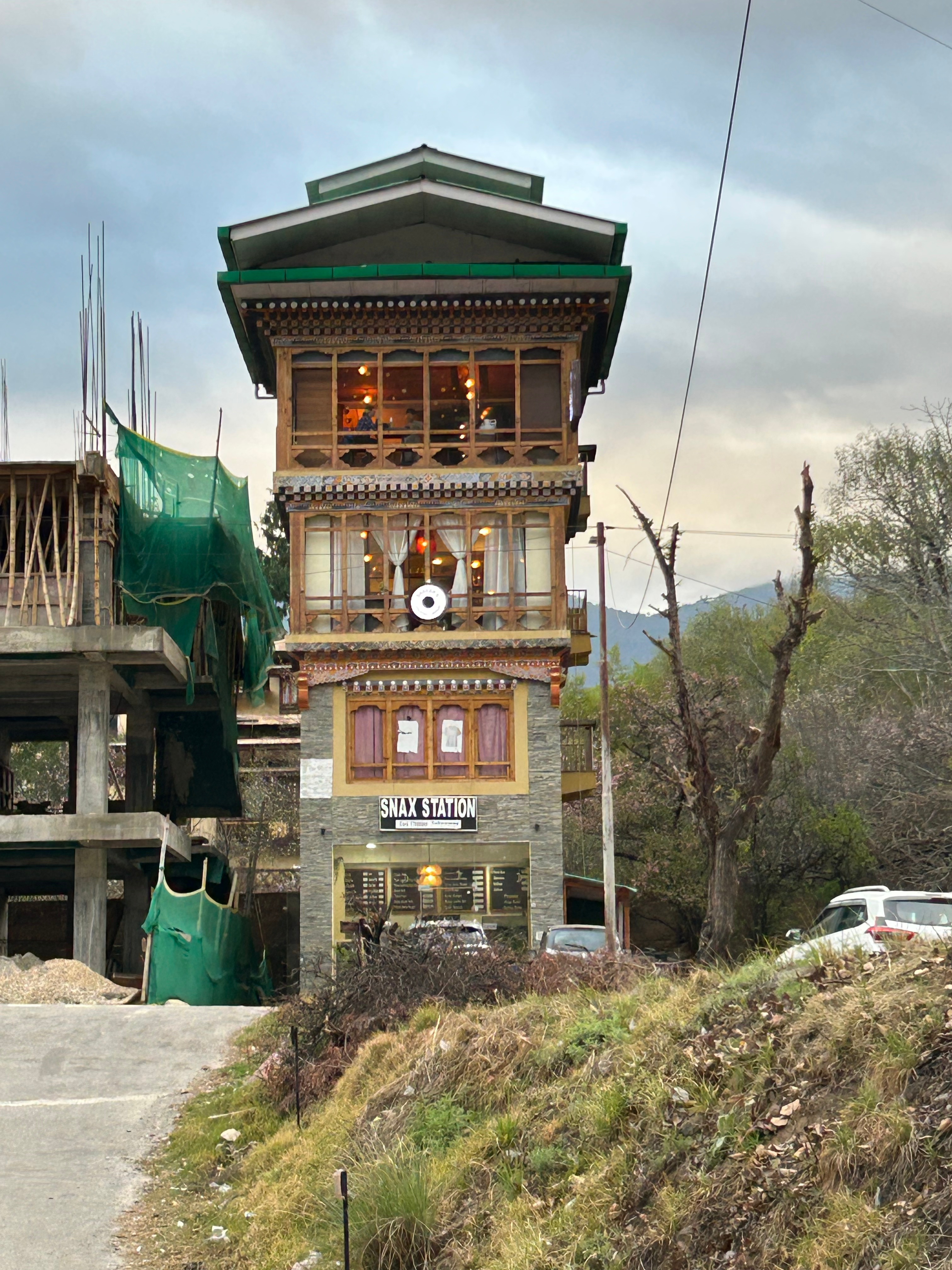
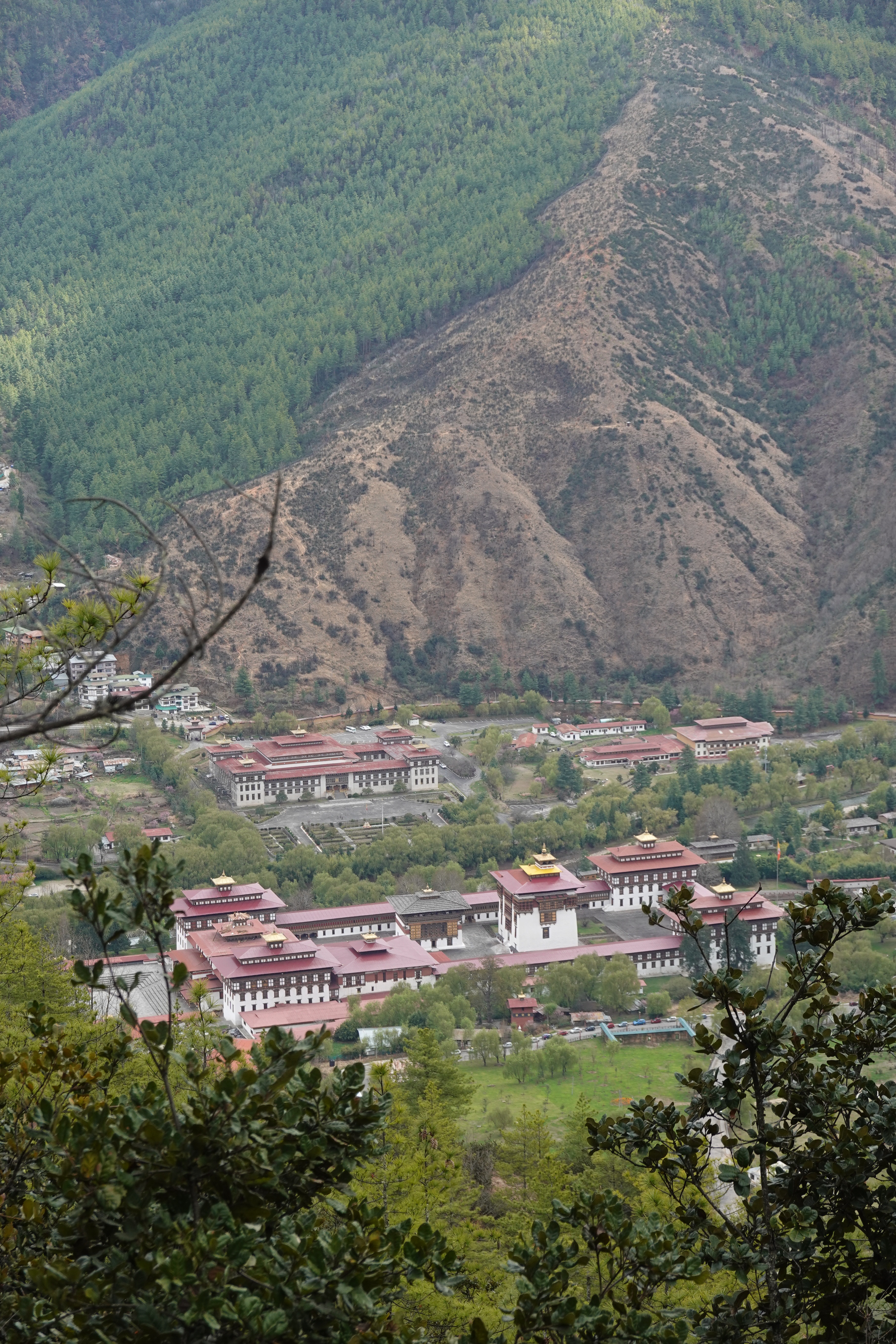
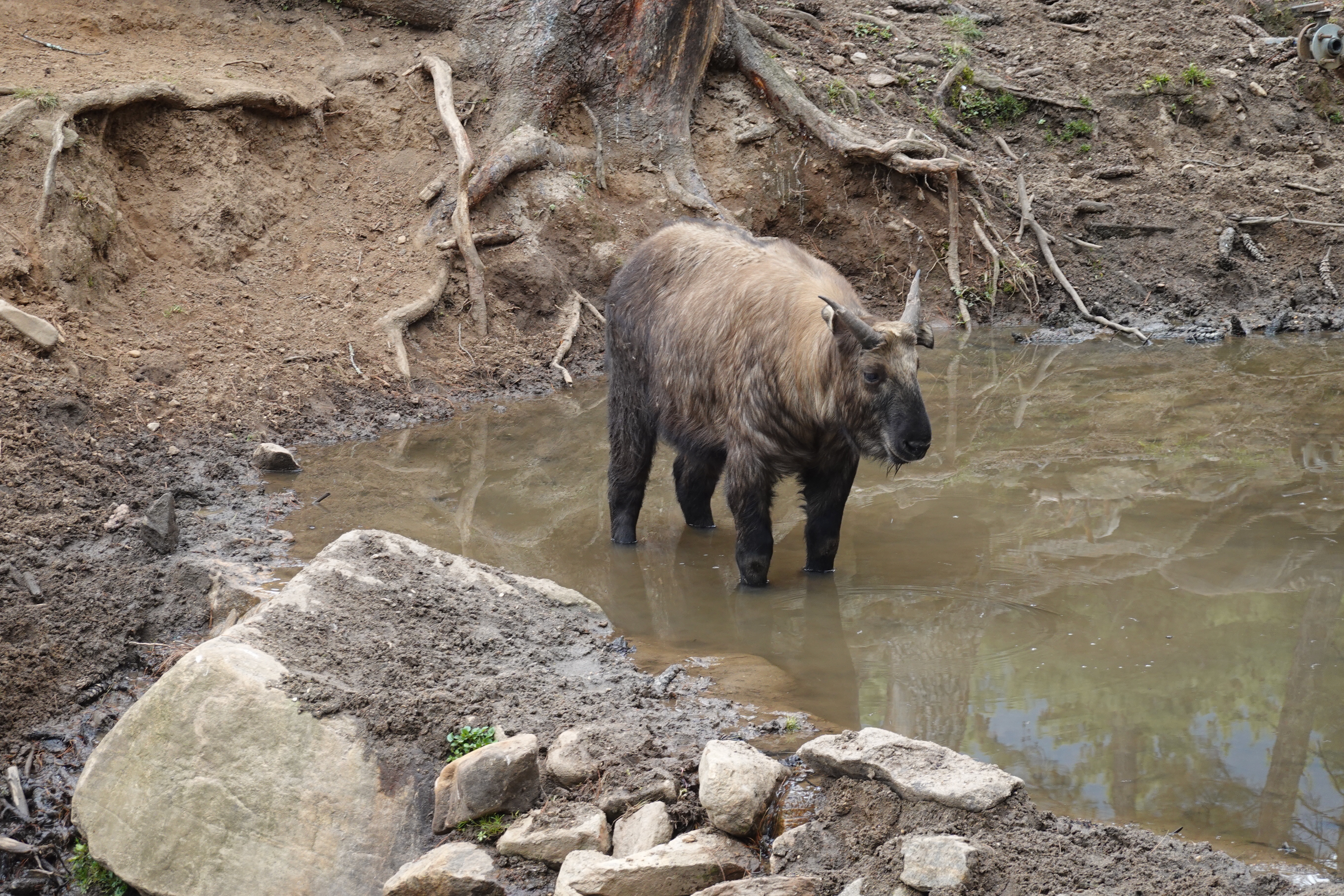
So we drove up about the curviest road ever built to Paro, at about 2250 m / 7400 ft, which was a bit of a change after starting the day at about 330 m. And then the next day, after the excitement of the Paro Festival, we were off to Thimphu (Tim-Pooh), the capital, at about 2350/7700. And we saw some cool things. Our guide, a fairly devout Buddhist, does not really distinguish between historical fact and religious myth when describing the doings of key figures of the past, so we saw the chain bridge built by a famous guru in the 17th century by making the iron links with his hands. We also went to an animal preserve and saw takins, one of the few large animals weirder looking than a moose, and the national animal of Bhutan, apparently not so much the product of evolution as the result of the Mad Guru taking the skeletons of a cow and a goat and putting the head of the latter on the body of the former to impress the villagers. We saw the vegetable market, too clean and well organized to be believable, and where we tried to squeeze the rock hard dried cheese cubes, one of which our guide popped in her cheek like a chew and which was still there when we left her two hours later. And we had a Red Panda craft beer at the cozy Drunken Yeti on the top floor of Thimphu’s narrowest building, accessed by the fire escape at the back.
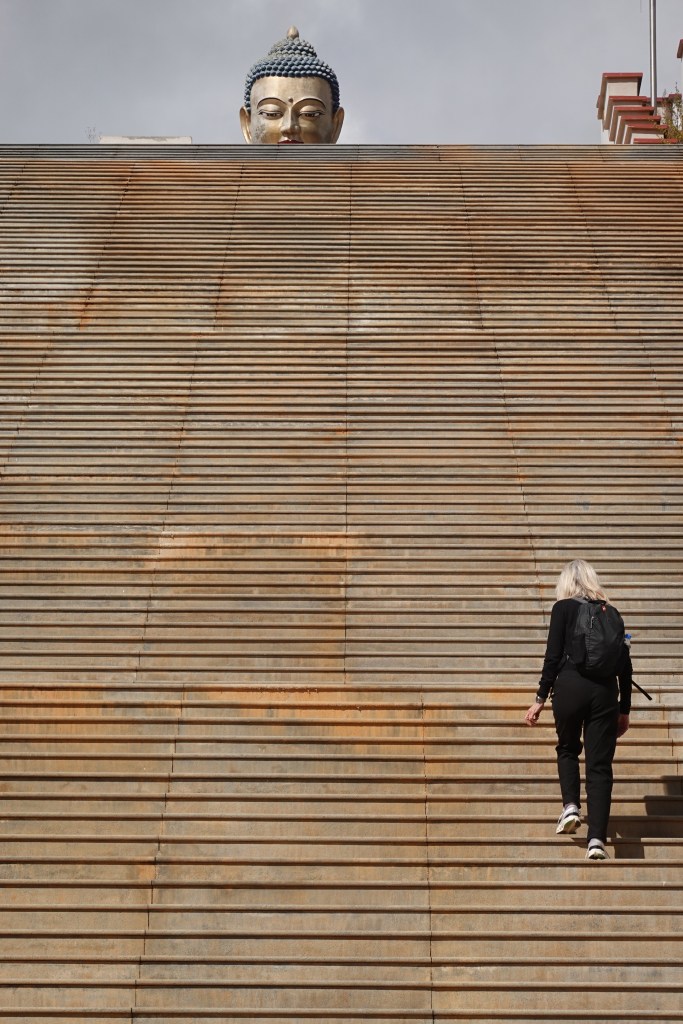
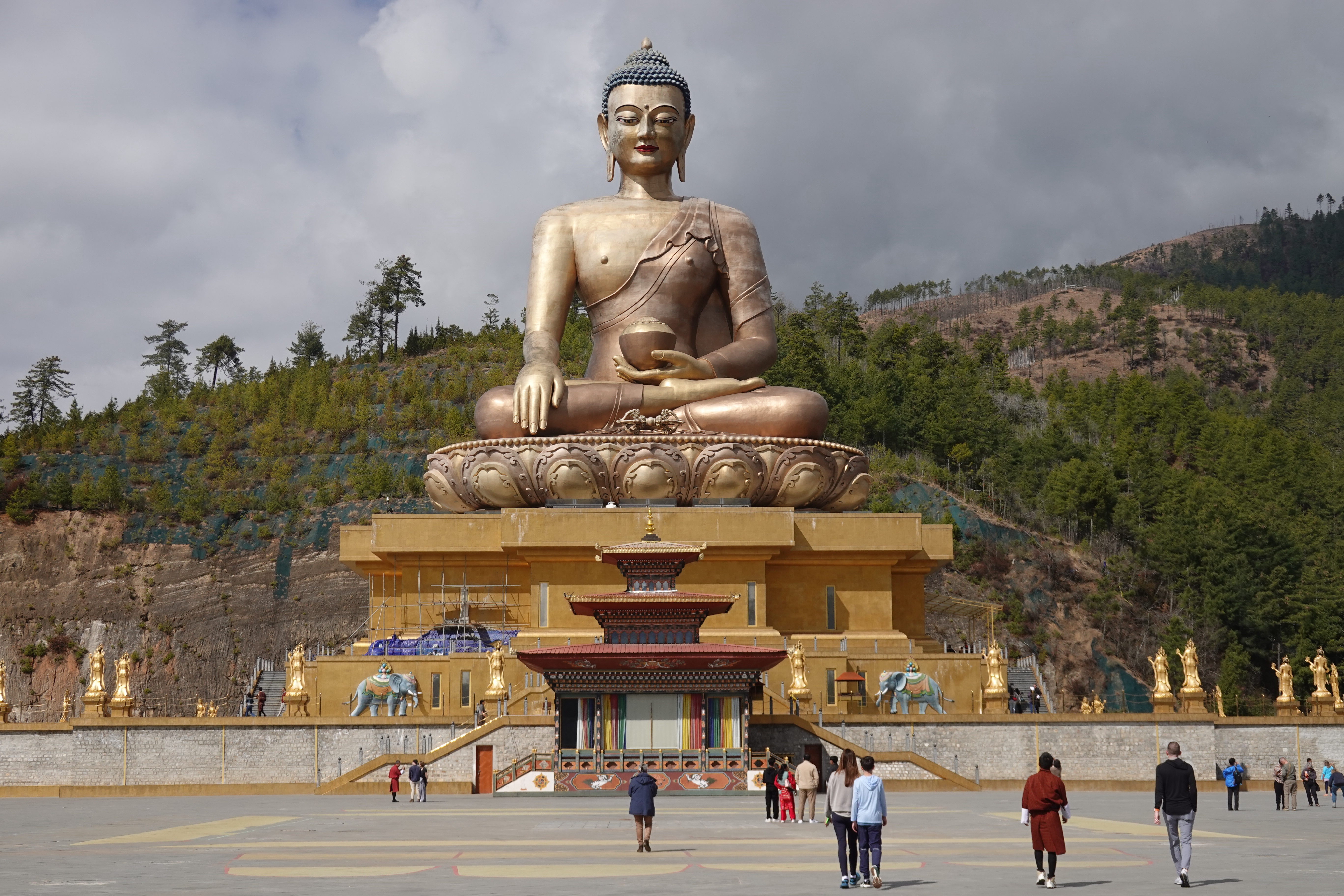
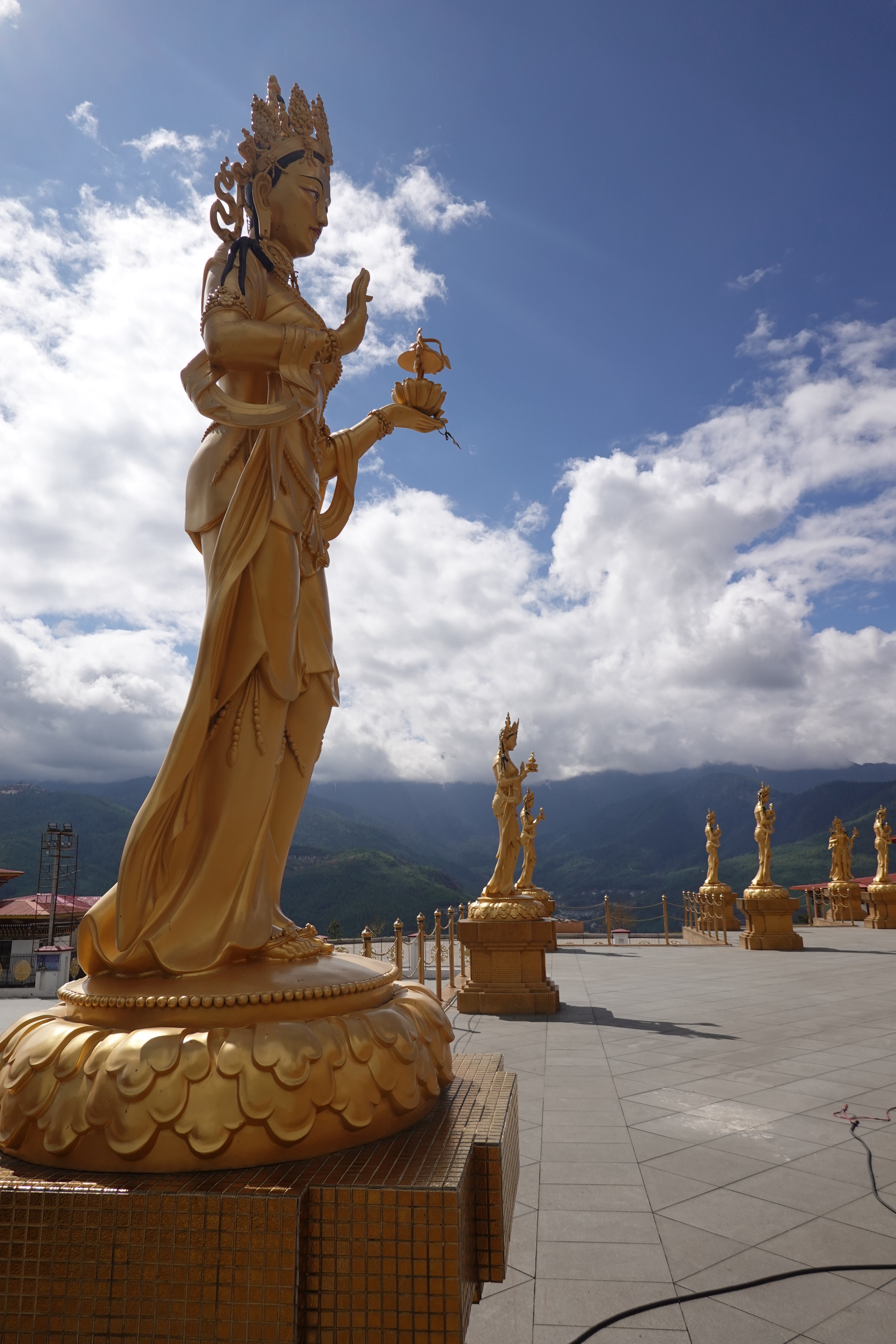
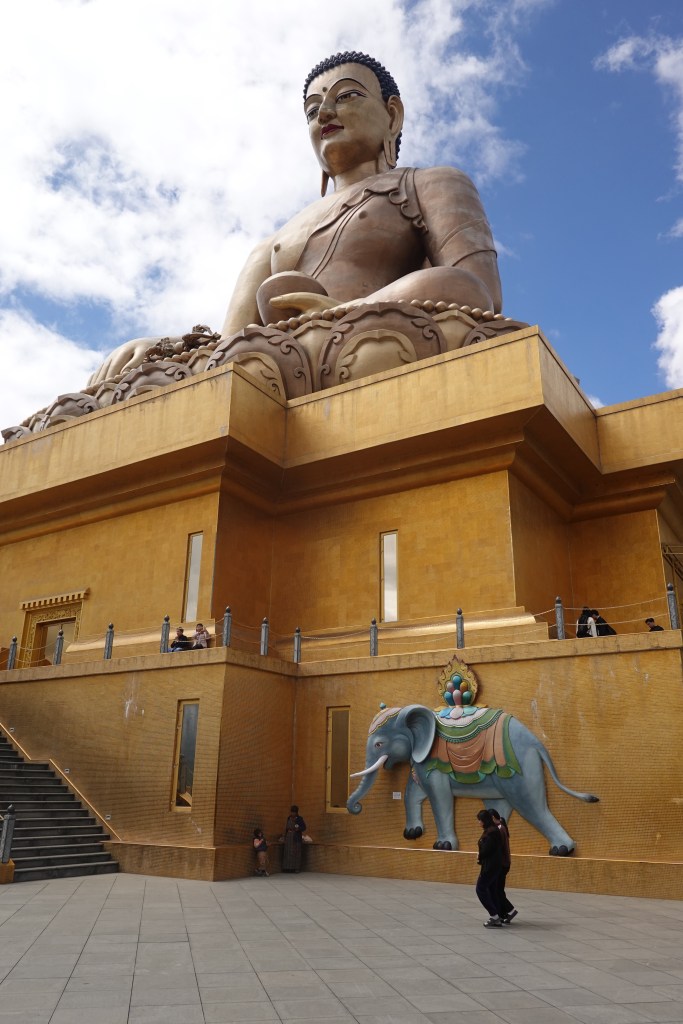
But the showstopper was the giant Buddha that sits high on the shoulder of a hill overlooking the city. About 54 meters high, made of bronze at a cost of over US$100million, and financed by a guy from Singapore who was clearly trying to make up for something. We decided to walk up the 288 steps rather than drive to the top, which seemed like a good idea from the bottom, and the slow reveal made for a terrific effect. It should have seemed like a gaudy and over the top display, but the feeling it imparted was strangely peaceful, perhaps because it commemorated one of the previous kings’s birthdays but was dedicated to world peace.
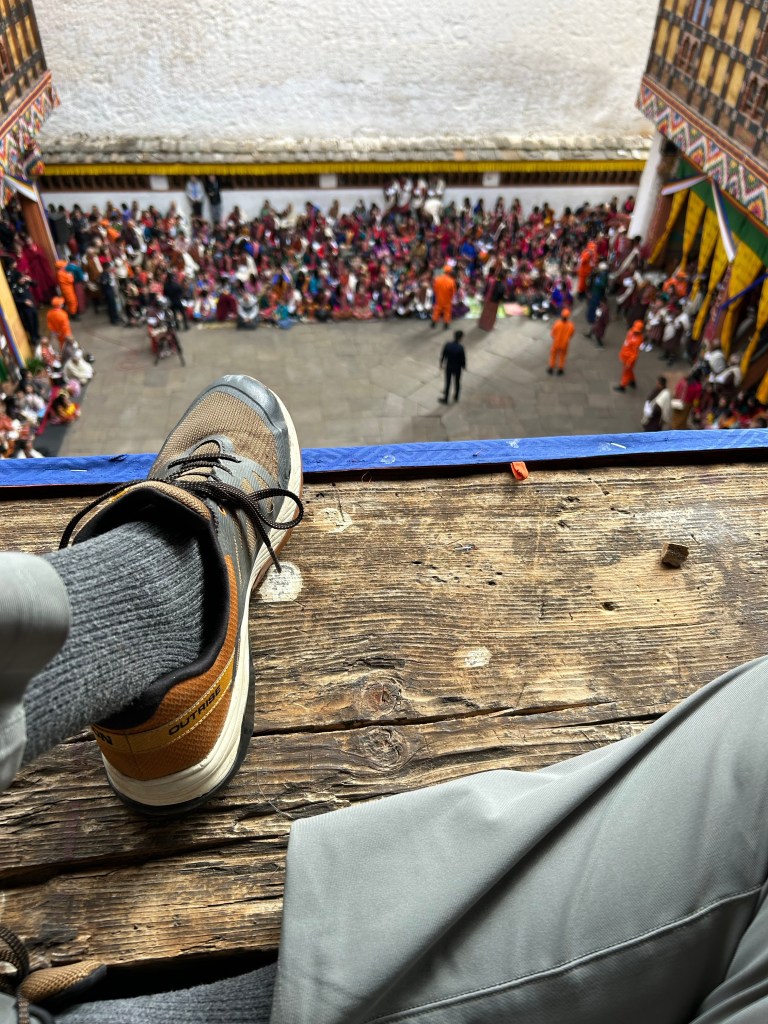
PS – My cousin Molly asked nicely for visual proof of my exact circumstances while perched on a ledge overlooking the Paro Festival, as reported earlier. See the last picture below.
 bengalbhutanblog.ca
Leave a comment